How do smart contracts work?
Blockchain technology Ethereum
Solidity
Ethereum Virtual Machine (EVM)
Ethereum Virtual Machine Bytecode
Gas fees
After a smart contract has been developed and tested , it is deployed on the respective blockchain platform. This process involves sending the contract code to the network, where it is stored on one or more nodes. Each of these nodes is part of the distributed network that supports the blockchain.
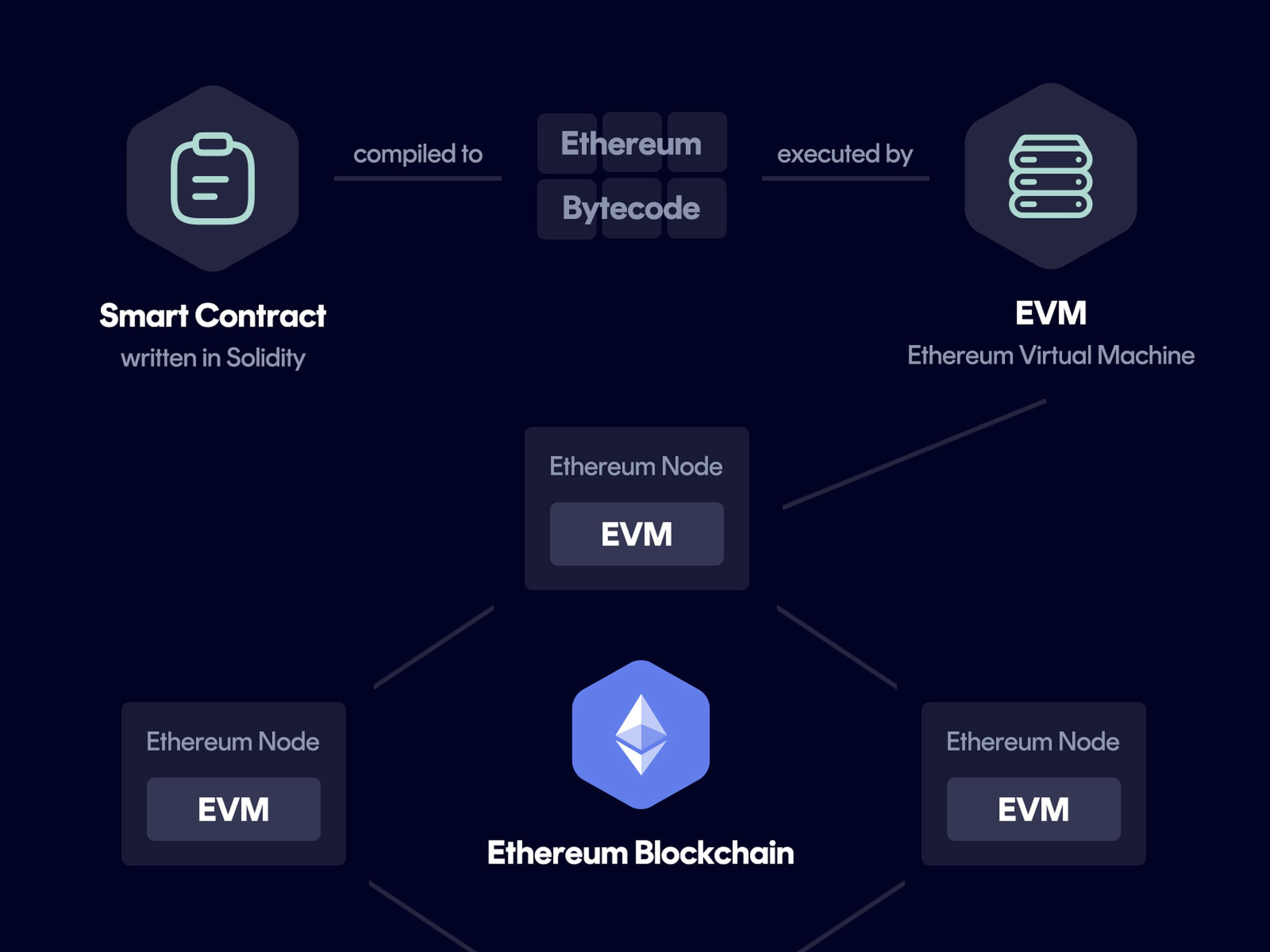
Once the conditions of the smart contract are met, it will be automatically executed by the EVM.
The execution of a smart contract may include, for example:
- Cryptocurrencies
- Triggering events in other smart contracts
- Updating information on the blockchain
The resulting transactions are validated by the nodes in the network and added to the blockchain as new blocks.
Due to their decentralized and immutable nature, smart contracts are transparent, tamper-proof and self-governing. They enable trustworthy transactions and agreements between different parties without relying on intermediaries such as banks or notaries.
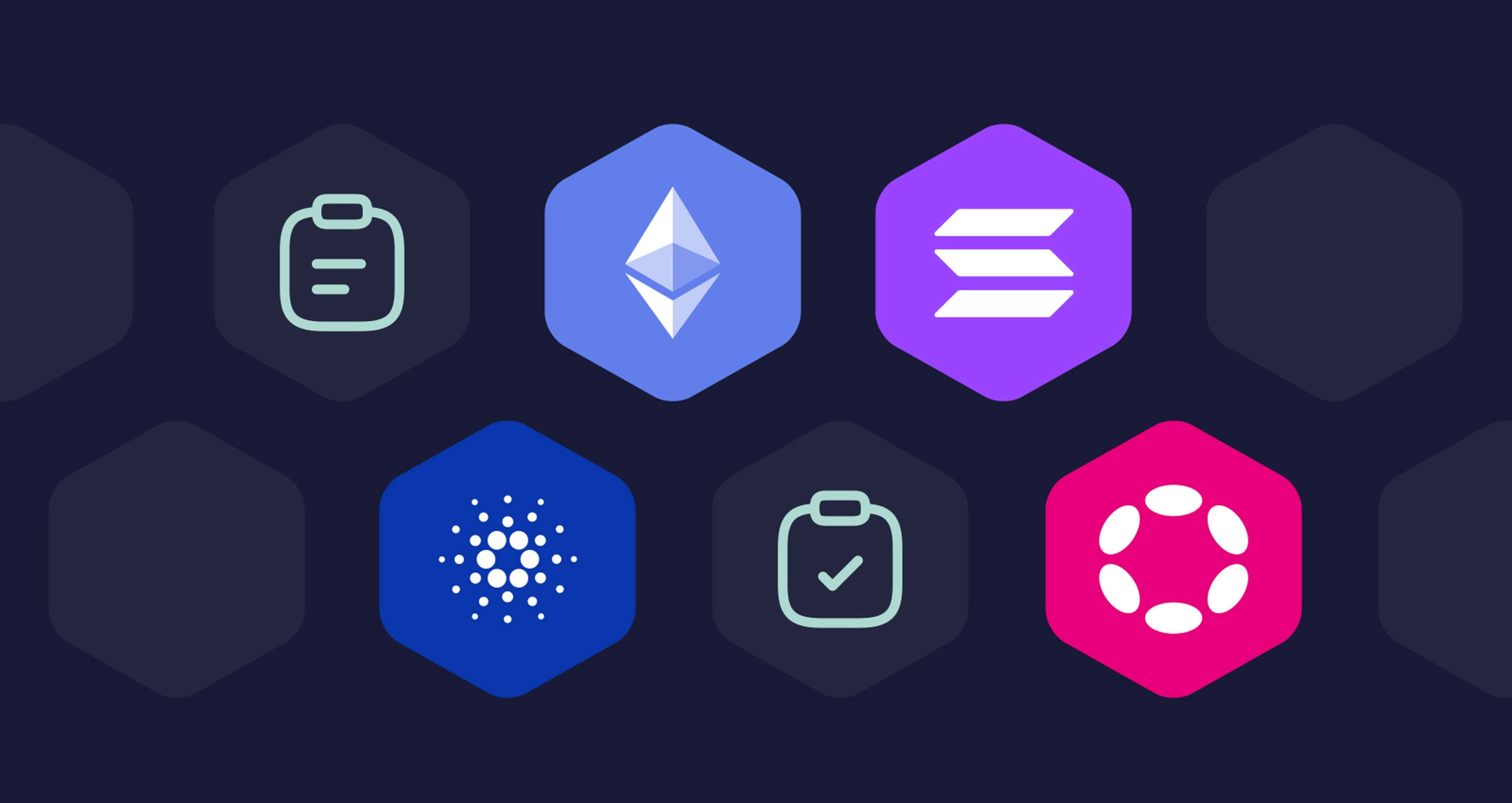
The 10 largest smart contract platforms
Advantages of Smart Contracts
- Automation : Smart contracts automatically execute actions once predefined conditions are met. This saves time and reduces human errors.
- Transparency : Since the contract terms are stored on the blockchain, all participants can view and verify the details.
- Cost efficiency : By eliminating intermediaries such as banks or notaries, smart contracts can help reduce transaction costs.
- Security : Blockchain technology offers a high level of security and immutability. Manipulation or subsequent changes to the contract are almost impossible.
- Trust : Smart contracts enable trustworthy transactions between different parties without relying on third parties
Disadvantages of Smart Contracts
- Technical complexity : Creating smart contracts requires specialized programming skills, which represents a high barrier to entry for many people.
- Vulnerability to errors : Programming errors or security vulnerabilities in the code can have serious consequences as they can potentially be exploited and lead to financial losses.
- Lack of flexibility : Smart contracts are very rigid in their execution. If circumstances change or unforeseen situations arise, it may be difficult to adjust the contract without completely recreating it.
- Regulation and legal uncertainty : Because smart contracts and blockchain technology are relatively new, there is still uncertainty in many countries regarding their regulation and legal recognition.
- Scalability and performance : The performance and scalability of smart contracts can be affected by the limitations of the underlying blockchain platform, which can lead to bottlenecks and delays in execution.
Examples and areas of application of smart contracts
Example 1: Finance
decentralized finance applications (DeFi)
Example 2: Supply Chain Management
In supply chain management, smart contracts offer the possibility of automatically processing and documenting transactions, production processes and deliveries.
Example 3: Real estate market
Smart contracts can simplify the purchase, sale or rental of real estate by automatically executing payments, transfers of ownership rights and other relevant contractual clauses.
Example 4: Intellectual Property and Copyright
Smart contracts can be used for automatic licensing and royalty distribution for copyright holders.
Example 5: E-Government
Possible uses for smart contracts in the public sector include issuing licenses, permits or managing social benefits.
Legal situation regarding smart contracts
Definition and execution of smart contracts
Smart contracts are not traditional, (digitally) signed agreements , but rather computer-controlled programs based on blockchain technology. They store the contract terms in code (“code is law”), which enables fully automated execution . Once set up, smart contracts are stored as a block of data on the blockchain and executed as soon as the contract conditions are met.
Legal recognition of smart contracts
There are questions about the legal recognition of smart contracts. Lawyers answer this question in the context of standard contract principles - offer, acceptance and consideration. Provided these elements are present, smart contracts can be viewed as legally binding contracts. Some states, such as Some countries, such as Arizona and Nevada in the US, have passed laws that recognize smart contracts but do not automatically convert them into binding contracts.
Legal enforcement of smart contracts
The enforceability of smart contracts depends on certain rules:
- Offer, acceptance, consideration : For legal enforceability, all of these components must be present.
- Legally Permissible Terms : A contract cannot contain any terms that are not legally enforceable.
- Electronic signatures : Smart contracts must be legally approved for electronic signatures. Some types of agreements cannot be signed electronically.
Challenges and legal problems
There are some challenges and potential problems when using smart contracts:
- Automatic enforcement : If the terms of a smart contract are found to be legally unenforceable, this may cause difficulties as the contract will be executed automatically.
- Contract changes : Once a smart contract has been activated, no changes can be made. Possible changes require creating a completely new contract.
- Dispute Resolution : Due to the immutability of smart contracts, resolving disputes can be complicated.
- Data protection and anonymity : Since smart contracts are based on blockchain technology, questions could arise about data protection and the anonymity of those involved.
- Protection of consumer interests : How can consumer rights be safeguarded under smart contracts, especially given the automated and immutable nature of smart contracts?
- Jurisdiction : Because blockchain networks are inherently decentralized, questions may arise as to which court has jurisdiction when litigation arises
Despite the current challenges, smart contracts are expected to become more widely used and may ultimately transform the way we enter into contracts. When and how German legislators will deal with this and decide on a legal basis remains to be seen.
Challenges and future developments
Interoperability
Interoperability between different blockchain platforms and smart contract protocols is an important challenge to promote the widespread adoption and application of smart contracts.
Scalability
The scalability of blockchain technology is crucial to meet growing transaction speed and volume requirements. Advances in areas such as Layer 2 solutions or sharding can help address these challenges.
Data protection and anonymity
Zero-knowledge proofs
Legal regulations and standardization
Creating clear legal frameworks and industry-wide standards can help increase legal certainty and trust in smart contracts.
Conclusion
Smart contracts have the potential to fundamentally change contract execution and business processes in various industries. Despite existing challenges and uncertainties, they offer significant benefits in terms of efficiency, transparency and security. Through technological advances, legal clarity and wider acceptance, smart contracts could play a central role in the digital economy of the future.
About the author

At Exchange Flow, Ethan is recognized as the resident crypto expert. With 10+years of experience navigating the waters of global crypto exchanges, Ethan is a trusted voice in the ever-evolving world of digital currencies. He tests and scrutinizes exchanges so you don’t have to, offering reviews and articles that newbies and seasoned traders alike find invaluable. When he’s not coding, Ethan likes to travel and play retro games. He uses his crypto earnings to fund his trip around the globe.


What is High Frequency Trading in Crypto?
High-frequency trading (HFT) in crypto involves buying or selling cryptocurrencies at an extremely rapid rate with the aid of computer programs. Because these buy-and-sell" trading opportunities could disappear within seconds, AI programs and complex algorithms are needed to execute trades.

What are Smart Contracts?
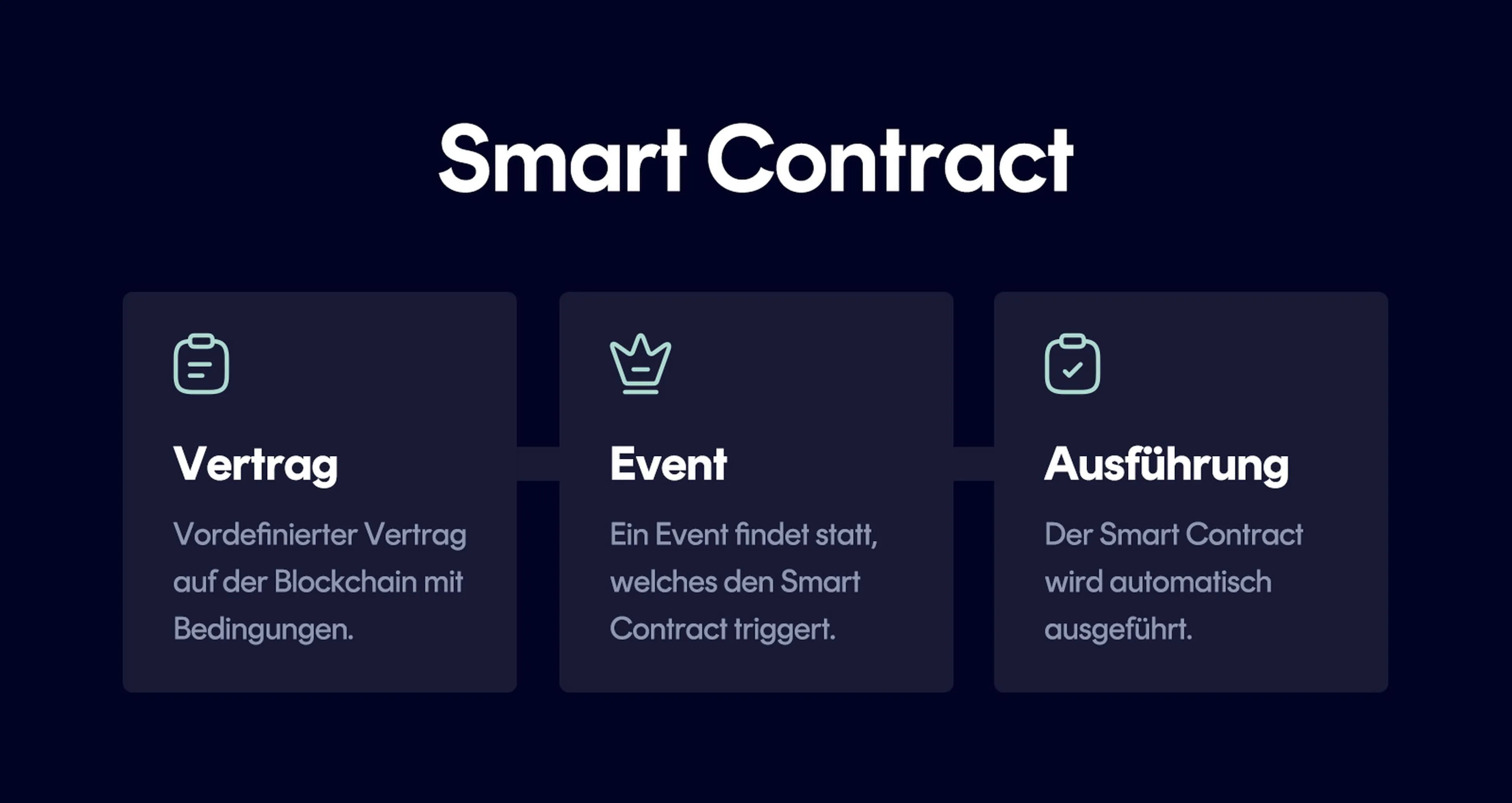
Smart contracts are digital, self-executing contracts based on blockchain technology. Your contract terms are recorded in code and executed automatically once the defined criteria are met.