



Do you have ideas or suggestions for changes? Then we look forward to your feedback! We make every effort to keep all metrics and information as up-to-date as possible. However, if you discover an error or outdated information, we would be delighted to hear from you.
Feel free to write to us:

Transferable to your own wallet
Self-custody of cryptocurrencies plays an important role for many users who want to manage their cryptocurrencies and thus their "private keys" themselves and not leave them in the hands of the exchange. Most exchanges offer the option of sending the purchased cryptocurrencies to their own wallet.
Deposit protection describes how a provider safeguards customer assets if it becomes insolvent or loses funds in a hack. Government deposit insurance does not cover crypto held on an exchange: FDIC insurance in the US and the EU deposit guarantee of up to €100,000 per depositor and bank cover money held at banks only. Some exchanges run their own insurance policy or protection fund instead, which covers part of customer assets on terms the exchange sets.
The overall rating is our editorial judgment of the platform as a whole. It draws on the six individual ratings, but it is not their average and has no fixed weights. Our ratings do not constitute investment advice, but merely our personal opinion. You are welcome to use them as rough indicators and additional perspective. In the dynamic and fast-growing crypto sector, parameters can often change from one day to the next, so we cannot guarantee that the rating data is up to date. Therefore, please never use our ratings as an isolated basis for decision-making and not as a substitute for your own research.
This rating describes our personal assessment of the user-friendliness of the product. How easy is the onboarding process? How modern is the user interface and is it easy to use? Are all the important functions quick and easy to find? We ask ourselves all these questions in order to give a personal rating from 1 to 10 points.
This rating describes our assessment of the fee structure of a stock exchange or broker. It is not only the amount of fees that can differ, but also the type of fees. The most common type of fees for crypto exchanges are the "maker/taker" fees or spreads. In some cases, there are also hidden fees that are not recognizable to users at first glance.
For products or services in the crypto space, trust and security should be the biggest factors in the selection process. Since we could not seriously evaluate the technical security of a platform or product, we analyze publicly available factors such as security features, certifications, audits, team/company, general reputation and, of course, track record.
Crypto doesn't have to be cryptic. Especially for beginners, the first contact with the crypto world can be overwhelming. With this rating, we give our assessment of how easy it is for beginners to find their way around: from the onboarding process to using the most important functions.
Customer support is an important factor for many users. A long wait or no response at all in the event of problems can be frustrating, especially when it comes to sensitive topics such as finances. With this rating, we give our assessment of the quality of customer support. In order to provide as balanced an assessment as possible, we also include user opinions from other platforms in our evaluation.
Some exchanges and brokers are regulated by financial supervisory authorities in certain countries/states. This often entails strict financial regulatory requirements and compliance requirements to which the company must adhere. Regulatory clarity can contribute to greater transparency and thus also greater trustworthiness.





Coinbase Review

Exchange Flow is reader-supported. We may earn a commission when you sign up through our links. Commissions do not influence our ratings or rankings. Advertiser Disclosure

Coinbase is a US-listed exchange accessible to residents in every US state, with regulatory licenses in the US, Luxembourg, and the UK. In our view it is a good place for a first crypto purchase, with a simple app and a regulated operator. Active traders can pay less: we would compare Kraken Pro first, whose entry-level taker fee is 0.80%, against 0.90% on Coinbase Advanced in the US.


Overview
Quick Facts
Coinbase, Inc. operates the Coinbase exchange within the US. The parent company, Coinbase Global, Inc., is publicly traded on Nasdaq with the ticker COIN. Founded in 2012, the company was established by Brian Armstrong and Fred Ehrsam.
Informations



Pro's & Con's
- Open in every US state, including New York under an NYDFS license
- Money transmitter licenses in 47 US jurisdictions, plus authorizations in Luxembourg, the UK and Canada
- Simple app for buying, plus Coinbase Advanced with TradingView charts and advanced order types
- More than 400 crypto assets with live markets, plus commission-free US stock trading 24/5
- Two-factor authentication switched on by default, with security key support
- Parent company listed on Nasdaq, with quarterly financial reports
- Higher entry-level fees than Kraken Pro: 0.50% maker and 0.90% taker on Coinbase Advanced in the US, against 0.40% and 0.80%
- Simple buys include a spread, and simple limit orders add a 1% execution fee
- Bitcoin and Ether futures for US customers go up to 10x leverage, so traders who want more look elsewhere
- No proof-of-reserves report for exchange balances that we could find
Coinbase
Features
Feature Overview


Unique Features
- Spot, futures trading options
- Coinbase Card
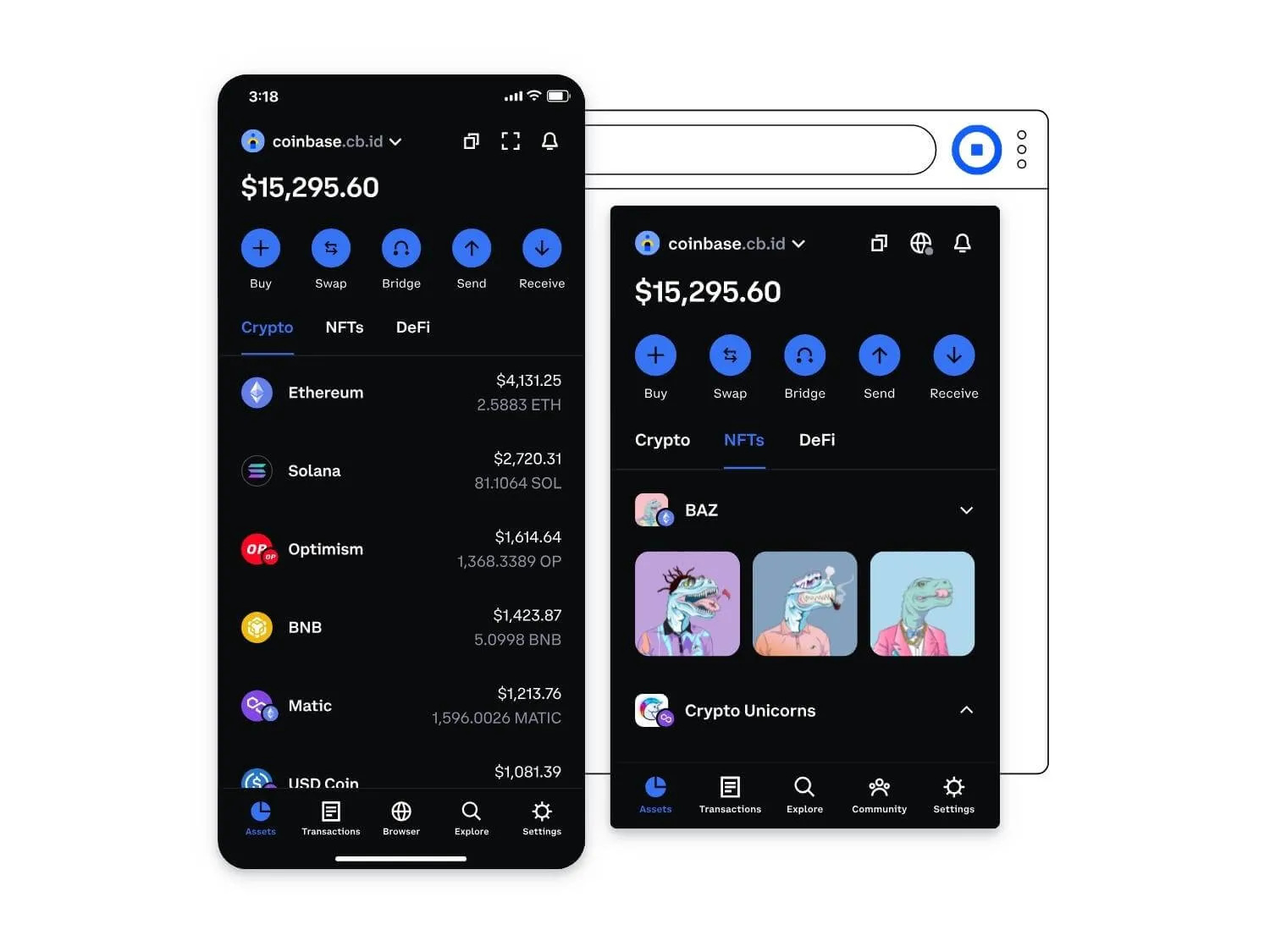
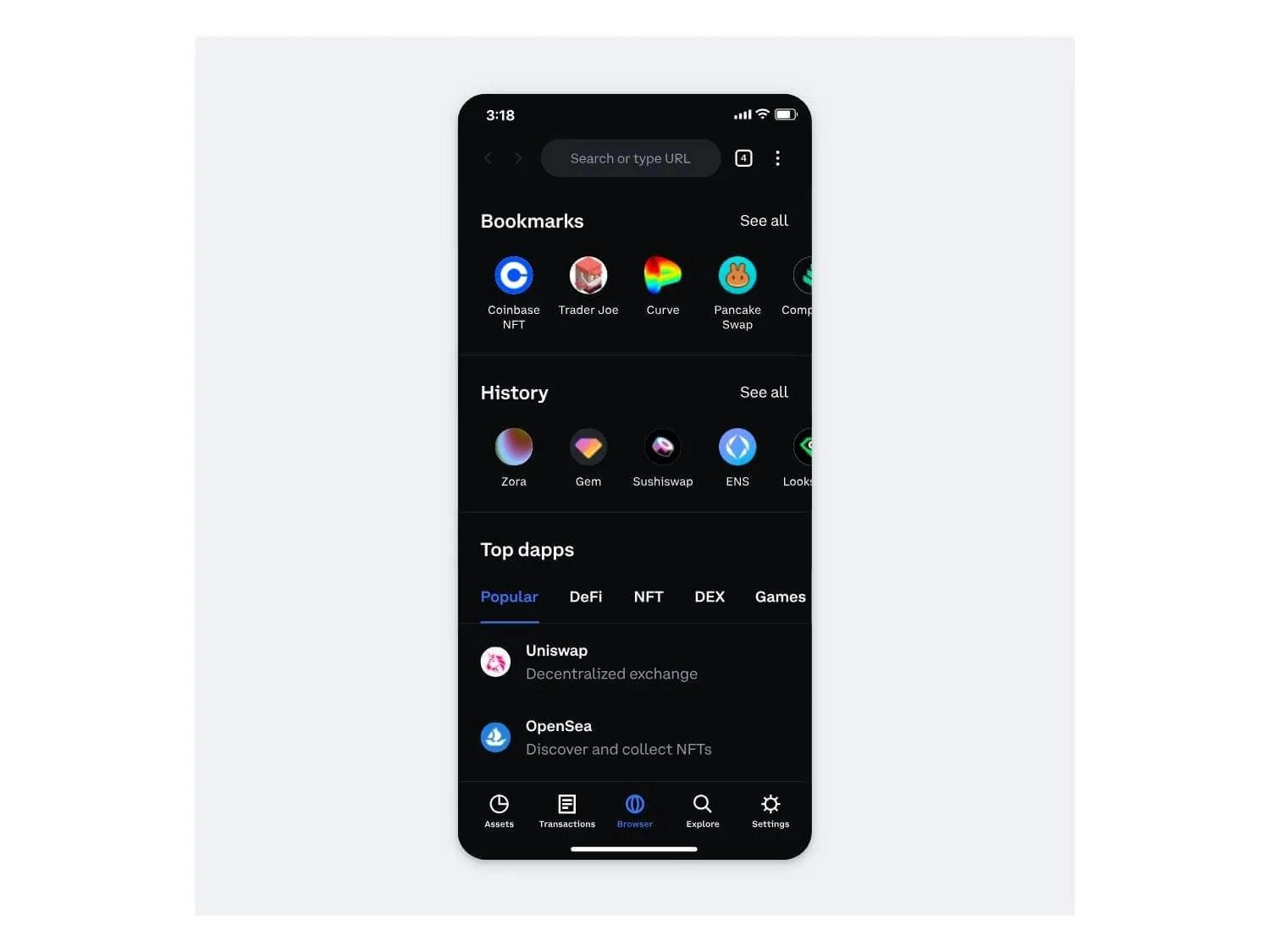
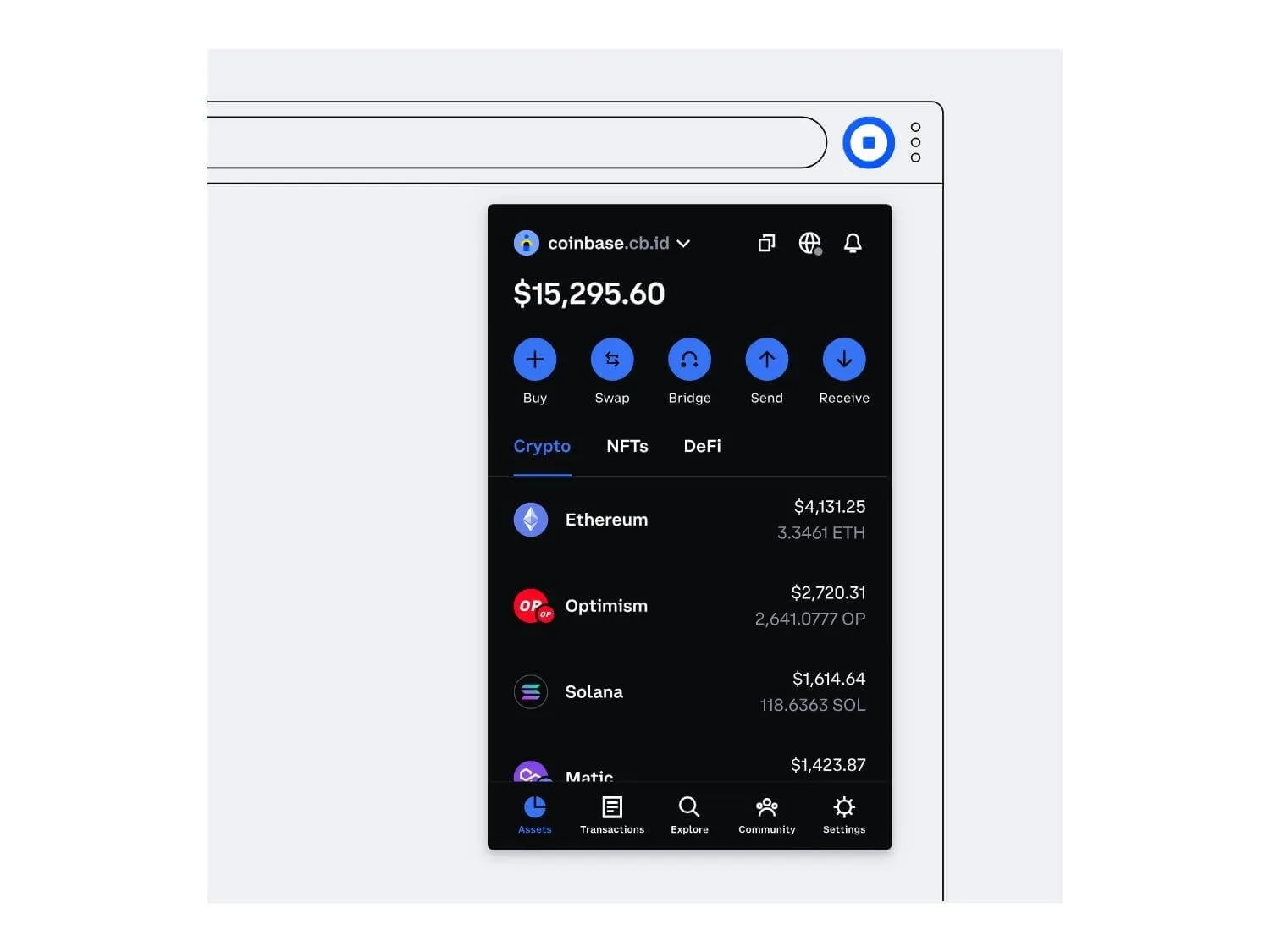
- Coinbase Wallet
Tradable Assets
- Cryptocurrencies
Trading Options
- Coinbase Advanced Trade for trading
Our
Coinbase
Review
Our Rating

Conclusion
Coinbase is a US-listed exchange accessible to residents in every US state, with regulatory licenses in the US, Luxembourg, and the UK. In our view it is a good place for a first crypto purchase, with a simple app and a regulated operator. Active traders can pay less: we would compare Kraken Pro first, whose entry-level taker fee is 0.80%, against 0.90% on Coinbase Advanced in the US.
Customer Reviews
/ 5 average rating from 1 reviews

...
Write a Review
Share your experience! Your review can help others make informed decisions. Let us know what worked well and what could be improved. Your feedback is valuable and will contribute to our community’s knowledge.


Coinbase splits its product into two distinct screens. The standard application handles buying, selling, sending, and recurring purchases. It provides a preview screen that displays the spread and the Coinbase fee prior to confirmation. Coinbase Advanced introduces TradingView charts alongside advanced order types. The Coinbase app holds an average rating of 4.68 on Apple's American App Store and 4.3 on Google Play. We believe that the dual-screen approach simplifies initial use but also represents a significant drawback: the more affordable trading option is located on a separate screen that a first-time user might not explore.
Coinbase lists more than 400 crypto assets with live markets. In the US, the Coinbase app also provides commission-free stock trading 24 hours a day, five days a week, futures and perpetual-style futures with up to 10x leverage on Bitcoin and Ether, prediction markets managed by Kalshi, and USDC loans against crypto through Morpho on Base. Staking, recurring buys, the Coinbase Card, and DEX trading in the app round out the offerings, and the former Coinbase Wallet is now named Base App. Outside the US, Coinbase provides crypto options through Deribit, which it acquired in 2025. We believe this is a broad range for an app built around first purchases. For active trading, refer to the alternatives below.
In our view a first purchase on Coinbase is simple. Start by verifying your identity, then add a payment method like a bank account, debit card, or PayPal in the US, and proceed to buy. The catch, in our view, is cost. The simple Buy button includes a spread and a Coinbase fee, and on a purchase under $200 that fee can reach $10. Purchase limits vary based on account type, location, and chosen payment method, and Coinbase offers no fixed figures. In our view Coinbase is a good place to learn the basics, as long as you read the fee line on the preview screen before every order. If you're considering different options for your first account in the US, our list of exchanges for US customers compares Coinbase with other alternatives.

In our view cost is the main trade-off on Coinbase. On Coinbase Advanced, US customers pay 0.50% maker and 0.90% taker at the entry level, against 0.25% and 0.50% in the EU and UK and 0.09% and 0.10% in Brazil and India. Kraken Pro begins with fees of 0.40% for makers and 0.80% for takers, as detailed in our Coinbase vs Kraken comparison. The simple app involves a spread and a Coinbase fee, while simple limit orders incur a separate 1% fee. Coinbase also retains a 35% commission on staking rewards for assets such as ETH and SOL. The Coinbase One subscription removes the Coinbase fee on simple trades within monthly limits, but not the spread. We think the costs are acceptable for occasional buyers who use Coinbase Advanced and high for anyone who relies on the simple Buy button.
Coinbase's parent company is listed on Nasdaq, providing quarterly reports. The group is licensed or registered with US state regulators, NYDFS, the CFTC, Luxembourg's CSSF, and the FCA. Two-factor authentication is switched on by default, and Coinbase says it holds customer crypto 1:1 and does not lend it without permission. In our view that makes Coinbase easier to scrutinize than exchanges that publish no accounts. However, its record is not perfect: the FCA fined its UK e-money firm in July 2024, and crypto balances lack FDIC or SIPC protection.
In our view Coinbase's help center is one of its strengths, offering detailed documentation on fees, limits, and state rules. A significant portion of this review is based on that resource. Coinbase One members in the US, France and Singapore also get account takeover protection of up to $1K, $10K or $250K, depending on the tier. However, support was a notable weak point in May 2025 when criminals managed to bribe support staff outside the US, leading to the copying of customer data. In response, Coinbase has stated it would reimburse customers who were deceived into sending funds. In our view, any call or message that claims to come from Coinbase support deserves a second look before you act on it.
In our view, Coinbase is a solid initial exchange for US residents, including those in New York, who prioritize licenses, a listed parent company, and a straightforward app. If you are willing to move to Coinbase Advanced for lower fees, we think it is a reasonable option. We think it is a weaker fit for active, price-focused traders, who pay less at Kraken Pro, and for small, frequent purchases through the simple Buy button. A few products, such as new staking in four states and crypto loans in New York, are not offered everywhere, so check the state list in this review before you rely on one.
About
Coinbase
Coinbase

Coinbase Review: Fees, US Availability, Regulation and Who It Suits
Our verdict: Coinbase is a regulated, US-listed exchange that offers a straightforward app, available in every US state and licensed by NYDFS in New York. We believe it serves as a convenient initial option for US buyers. However, this simplicity comes at a price: basic purchases include a spread and a Coinbase fee. On Coinbase Advanced, the US entry level is 0.50% for maker and 0.90% for taker.
Who it is for, in our view: US residents who want crypto, commission-free stock trading, and CFTC-regulated futures in a single app. It also suits buyers in New York, which Kraken does not serve, and those purchasing occasionally rather than trading daily.
Who it is not for, in our view: active traders focused on price, who face 0.40% maker and 0.80% taker fees at Kraken Pro's initial tier (see our Kraken review), as well as US traders seeking more than 10x leverage on Bitcoin or Ether.
How we checked: we read Coinbase's US user agreement, help center, fee announcement, license pages and quarterly reports, looked up its entries in the FCA register and the European register of crypto-asset service providers, checked its public market data and app store ratings, and compared its fees with Kraken Pro's first tier. Every fact on this page comes from a primary source, such as the provider's own documents, a regulator or an app store. The scores on this page are our editorial ratings.
| Crypto Exchange | Cryptos | Trading Fee | Withdrawal Fee | For US Users? | EF Score |
|---|---|---|---|---|---|
 WEEX | 1173 | 0.1 % | ₿ 0.00016 | No |  9.8 /10 |
 MEXC | 1262 | 0.05 % | ₿ 0.00002 | No | 9.6 /10 |
 Binance | 416 | 0.1 % | VariesBinance sets this fee itself and adjusts it to activity on the Bitcoin network. On 2026-10-03 it charged 0.00002 BTC for a Bitcoin network withdrawal, about $1.69 at Binance's BTC/USDT price. | No | 9.4 /10 |
 OKX | 304 | 0.35OKX US entry tier (OKX INC.) for US residents. The global and EEA entry tier is 0.08% maker and 0.10% taker. % | VariesOKX charges the Bitcoin network fee it shows on its withdrawal page, and the amount changes with network load. On 2026-10-05 it showed 0.000015 BTC, about $1.29 at the OKX BTC index price. | Yes | 9.3 /10 |
 Bitpanda | 568 | 0.99 % | VariesBitpanda adjusts this fee to congestion on the Bitcoin network and says it earns nothing from it. On 2026-10-03 it showed 0.00000598 BTC, about $0.51 at Bitpanda's BTC price. | No | 9.2 /10 |
 KuCoin | 837 | 0.1 % | ₿ 0.00009 | No | 8.9 /10 |
 Bitvavo | 426 | 0.25 % | VariesBitvavo sets this fee itself and changes it with blockchain capacity. On 2026-10-03 it charged 0.000017 BTC, about $1.44 at Bitvavo's BTC/USDC price. | No | 8.8 /10 |
 eToro | 150 | 1 % | VariesMoving BTC from your eToro investment account to the eToro crypto wallet costs 2% of the amount (at least $1, at most $100). Sending it from the wallet to an external address then costs only the Bitcoin network fee. | Yes | 8.8 /10 |
 Kraken | 629 | 0.8 % | VariesKraken may adjust this fee as its costs and market conditions change. On 2026-10-03 its fee page showed 0.000015 BTC for a Bitcoin withdrawal when viewed from the US. | Yes | 8.8 /10 |
 Pionex | 311 | 0.05 % | ₿ 0.000018 | No | 8.5 /10 |
 Bybit | 393 | 0.1 % | VariesBybit sets this fee itself and changes it often. Between 2026-10-02 and 2026-10-05 it showed 0.000035 to 0.000068 BTC for a Bitcoin network withdrawal. | No | 8.5 /10 |
Coinbase | 407 | 0.9Coinbase Advanced spot entry tier for US residents. In the EU and UK the entry tier is 0.25% maker and 0.50% taker; in Brazil, India and other international markets it is 0.09% maker and 0.10% taker. % | VariesCoinbase sets this fee from its own estimate. Estimated Bitcoin network cost on 2026-10-03: about $0.36 (range $0.12 to $0.83 over the previous 24 hours, mempool.space). | Yes | 8.3 /10 |
 BSDEX | 10 | 0.35 % | ₿ 0 | No | 8.2 /10 |
 Bitfinex | 68 | 0 % | ₿ 0.00006 | No | 8.1 /10 |
 Bitstamp | 114 | 0.4 % | VariesBitstamp charges its own estimate of the Bitcoin network fee plus a processing fee it does not publish, and shows the total before you confirm. Estimated network cost on 2026-10-03: about $0.36 (range $0.12 to $0.83 over the previous 24 hours, mempool.space); the processing fee comes on top. | Yes | 8.1 /10 |
 Bitget | 511 | 0.1 % | ₿ 0.00002 | No | 8 /10 |
 justTRADE | 73 | 0.125justTRADE charges no maker or taker fees. You pay a 0.125% commission per crypto order plus a spread of at least 0.175% in the price. % | Not possiblejustTRADE does not allow transfers of crypto into or out of your account. | No | 8 /10 |
 Crypto.com | 416 | 0.5 % | VariesCrypto.com Exchange quotes 0.0004 BTC for a Bitcoin withdrawal, about $33.82 at its BTC price on 2026-10-03. The quote is based on an estimate of network fees, so the final fee may differ. | Yes | 8 /10 |
 Trade Republic | 50 | 0Trade Republic charges no commission on crypto trades. You pay a €1 settlement fee per trade, plus a spread in the price. % | VariesTrade Republic charges no fee to send crypto; you pay only the Bitcoin network fee. Estimated network cost on 2026-10-03: about $0.36 (range $0.12 to $0.83 over the previous 24 hours, mempool.space). | No | 7.9 /10 |
 Phemex | 139 | 0.1 % | ₿ 0.000015 | No | 7.8 /10 |
 Scalable Capital | 32 | 1% % | Not possibleScalable Capital holds crypto as exchange-traded products (ETPs), not as coins, so you cannot withdraw it to a private wallet. In exceptional cases an ETP issuer may redeem the coins to your own wallet, with its own checks and fees. | No | 7.8 /10 |
 CEX.IO | 272 | 0.25 % | VariesCEX.IO lists this fee as floating and sets the amount itself. On 2026-10-03 it listed 0.000075 BTC, about $6.35 at CEX.IO's BTC price. | Yes | 7.5 /10 |
 Relai | 1 | 1Relai charges a 1.00% service fee on transactions of €50 to €99,999.99, plus its own margin in the price. % | No feeRelai's wallet is non-custodial, so the bitcoin you buy is held in your own wallet. Relai covers the Bitcoin network fee when you buy; when you sell, the network fee is included in the price shown. | No | 7.5 /10 |
 Plus500 | 24 | 0Plus500 offers crypto as CFDs in the EEA. It charges no fee to open or close a trade and is paid mainly through the spread built into its quoted price. % | Not possiblePlus500 offers crypto as CFDs, so there are no coins to withdraw. | No | 7.5 /10 |
 WhiteBIT | 338 | 0.1 % | VariesWhiteBIT bases this fee on blockchain fees and the price of bitcoin, and it can change the fee without notice. On 2026-10-08 it listed 0.00009 BTC for a withdrawal on the Bitcoin network, about $7.48 at WhiteBIT's BTC price. | No | 7.4 /10 |
 Gate.io | 1464 | 0.1 % | VariesGate adjusts its withdrawal fees every hour based on network conditions. On 2026-10-04 its fee page showed 0.00003 BTC for a Bitcoin withdrawal, about $2.57 at Gate's BTC price. | No | 7.2 /10 |
 BitFlyer | 9 | 0.1bitFlyer USA entry tier for Lightning Spot; bitFlyer Europe also charges 0.10%. On bitFlyer USA, the Buy/Sell service has no separate fee, but its prices include a fee of 0.1% to 6.0%, and more when prices move sharply. % | ₿ 0.0004 | Yes | 7.1 /10 |
 Hotcoin | 285 | 0.2 % | ₿ 0.00003 | No | 7.1 /10 |
 bitcoin.de | 8 | 0.5 % | Variesbitcoin.de adjusts this fee regularly to the current Bitcoin network fee and keeps none of it. On 2026-10-22 its fee page showed 0.00000401 BTC, about $0.33 at Coinbase's BTC price. | No | 7 /10 |
 Gemini | 80 | 1.2 % | VariesGemini charges a dynamic fee meant to cover the Bitcoin network fee. Estimated network cost on 2026-10-03: about $0.36 (range $0.12 to $0.83 over the previous 24 hours, mempool.space). | Yes | 6.5 /10 |
 LBank | 885 | 0.1 % | ₿ 0.00005 | No | 6.3 /10 |
 Libertex | 102 | 0.1Libertex offers crypto only as CFDs. It charges a 0.1% commission on crypto CFDs, and the spread varies with the market. % | Not possibleLibertex offers crypto only as CFDs, so there are no coins to withdraw. | No | 6.1 /10 |
 Upbit | 360 | 0.05 % | ₿ 0.0002 | No | 6 /10 |
CFD risk warning: Libertex and Plus500 offer crypto as CFDs (contracts for difference), so you trade on the price without owning the coins. CFDs are complex instruments and come with a high risk of losing money rapidly due to leverage. Most retail investor accounts lose money when trading CFDs with these providers. You should consider whether you understand how CFDs work and whether you can afford to take the high risk of losing your money.
Is Coinbase safe?
In our view, Coinbase ranks among the safer large exchanges, but no exchange is without risk. Coinbase, Inc., whose parent company is listed on Nasdaq, holds money transmitter licenses in 47 US jurisdictions and possesses a New York virtual currency license from NYDFS. Coinbase Luxembourg S.A. is authorized as a crypto-asset service provider by the CSSF, while CB Payments Ltd is an e-money institution authorized by the FCA and registered for specific cryptoasset activities in the UK.
Two-factor authentication is enabled by default, and Coinbase says it holds customer crypto 1:1 and does not lend it without permission. USD balances at Coinbase, Inc. may qualify for pass-through FDIC insurance up to the per-depositor limit. We think proof of reserves is still an open question because we couldn't find any such report for exchange customer balances.
In May 2025, Coinbase disclosed that bribed support staff outside the US copied account data of less than 1% of monthly transacting users, stating no passwords, private keys, or funds were exposed. The FCA fined CB Payments Ltd in July 2024, while the SEC dismissed its case against Coinbase on February 27, 2025. As crypto lacks FDIC or SIPC coverage, we think long-term holdings should be in a wallet you control.
Coinbase fees
Coinbase charges a spread plus a Coinbase fee on simple buys, and maker and taker fees on Coinbase Advanced.
- Coinbase Advanced spot, entry tier: 0.50% maker and 0.90% taker in the US, 0.25% and 0.50% in the EU and UK, down to 0.00% and 0.02% at VIP8
- Simple trades: a spread plus a Coinbase fee, shown before you confirm. Coinbase's US license page limits that fee to $10 on trades under $200 and 6% otherwise
- Simple limit orders: an additional 1% execution fee
- Bitcoin withdrawals: a network fee that varies, based on Coinbase's own estimate
- US bank wires: $10 incoming, $25 outgoing
In our view, Coinbase Advanced is worth learning if you buy more than occasionally.
Where Coinbase is available
Coinbase is available in the US. Its US user agreement requires you to be an adult residing in the United States and does not mention any excluded state, allowing you to open an account in every state, including New York, where Coinbase holds a virtual currency license from NYDFS.
Some products have state-specific variations. New staking options are not permitted in California, Maryland, New Jersey, and Wisconsin. The Coinbase Card is unavailable in Hawaii, prediction markets are closed in Nevada, and crypto-backed loans, Lightning payments, and sending on multiple networks are not offered in New York.
Coinbase serves the European Economic Area via Coinbase Luxembourg S.A. and the UK through CB Payments Ltd, with local entities or registrations in Canada, Australia, Singapore, and India. Coinbase blocks jurisdictions under sanctions programs of the US Treasury and other authorities but does not disclose a complete country list.
Coinbase fact sheet
- Operator in the US: Coinbase, Inc., a part of Coinbase Global, Inc. (Nasdaq: COIN), established in 2012
- Crypto assets: 407 with active markets
- Spot fees on Coinbase Advanced at the entry level: 0.50% maker and 0.90% taker in the US, 0.25% and 0.50% in the EU and UK, 0.09% and 0.10% in Brazil, India, and other international markets
- Top published tier: 0.00% maker and 0.02% taker at VIP8
- Bitcoin withdrawals: Varies, a fee based on Coinbase's estimate of the current network fee. Over Lightning 0.2%
- USDT withdrawals: a 0.01% processing fee, up to 20 USDT, plus a variable network fee
- US bank wires: $10 incoming, $25 outgoing
- Identity verification: mandatory when opening an account
What Coinbase costs in practice
Coinbase has two price models, and in our view the choice between them decides most of what you pay. The simple Buy and Sell buttons include a spread in the quoted price and add a Coinbase fee, both of which are displayed on the preview screen before confirmation. According to Coinbase's US license page, the Coinbase Fee will not exceed $10 on transactions under $200, or 6% on larger ones, with the spread on top. Simple limit orders incur a 1% execution fee and may include a 1.875% Coinbase fee, depending on the payment method.
Coinbase Advanced instead charges maker and taker fees. Following a fee change on September 16, 2026, a taker order at the US entry level costs 0.90% of its value, and a limit order that remains in the order book costs 0.50%. Coinbase indicates its Advanced tiers start at $10,000 in qualifying volume. If you buy more than occasionally, we think it pays to learn Coinbase Advanced or to look at Coinbase One, the subscription that removes the Coinbase fee on simple trades up to $500 a month on Basic, up to $10K on Preferred and without a cap on Premium. The spread still applies, and the 1% limit order fee remains.
Staking incurs a cost: Coinbase retains 35% of staking rewards on assets such as ETH and SOL, or 31.75%, 28.5%, or 25.25% for Coinbase One members, varying by tier.
Security, regulation and what protects your money
Two-factor authentication is enabled by default and supports security keys, and Coinbase Vault requires multiple approvals for withdrawals. Coinbase states it holds customer crypto 1:1 and does not lend it without consent. Dollar balances held with Coinbase, Inc. can qualify for pass-through FDIC or NCUSIF insurance up to the per-depositor limit, under the conditions in the user agreement, but the same agreement says digital assets are not protected by the FDIC or SIPC. In the UK, the FCA register shows that CB Payments Ltd customers cannot claim from the Financial Services Compensation Scheme if the firm fails.
In the US, Coinbase, Inc. holds money transmitter licenses in 47 jurisdictions listed on its license page, a New York virtual currency license from NYDFS (122466), and a FinCEN registration as a money services business. Futures are managed by Coinbase Financial Markets, a CFTC-registered futures commission merchant, and Coinbase Derivatives, LLC, a CFTC-designated contract market. US stocks are handled by Coinbase Capital Markets Corp., a FINRA and SIPC member. In the European Economic Area, Coinbase Luxembourg S.A. holds a crypto-asset service provider authorization from Luxembourg's CSSF (N00000004). Other group companies have e-money licenses in Ireland and the UK (FCA, FRN 900635), a CySEC investment firm license in Cyprus, and licenses or registrations in Canada, Australia (ASIC, AFSL 569752), Singapore, and India.
Proof of reserves is an open point. Coinbase's quarterly report shows $245.9 billion in assets on the platform as of June 30, 2026, but when we looked for this review we found no proof-of-reserves report for exchange customer balances on coinbase.com or in its help center. We count it neither for nor against Coinbase.
Incidents and legal history
May 2025 data theft
Criminals bribed a few support staff outside the US, who copied account data of less than 1% of Coinbase's monthly transacting users. Coinbase reported no passwords, private keys, or funds were exposed, rejected a $20 million extortion demand, pledged to reimburse customers misled into sending funds, and estimated preliminary costs between $180 million and $400 million.
SEC case and state actions
The Securities and Exchange Commission dismissed its civil case against Coinbase on February 27, 2025, and five of the state actions over staking that began in June 2023 were dropped in 2025.
Prediction markets
On April 21, 2026, New York's Attorney General sued Coinbase Financial Markets, calling its prediction markets illegal gambling; the case was still open when we checked. Coinbase says Nevada's State Gaming Control Board has issued a temporary restraining order that halts its prediction markets there.
FCA fine
In July 2024, the FCA fined CB Payments Ltd, Coinbase's UK e-money firm.
Alternatives to Coinbase
In our view Coinbase suits first purchases better than active trading. For active trading in the US, consider Kraken: Kraken Pro charges 0.40% maker and 0.80% taker at its first tier, offers spot margin to eligible US clients, and provides CFTC-regulated futures through Kraken Derivatives US. Kraken also publishes proof-of-reserves snapshots. It is not available to residents of New York or Maine. Our Kraken review contains detailed information, and Coinbase vs Kraken compares the two side by side.
For more options in the US, see our list of exchanges for US customers. If residing outside the US, explore our lists of exchanges for beginners and exchanges for day trading, which compare platforms by fees and tools.
FAQ
What is the Coinbase withdrawal fee?
It varies. Coinbase charges no fixed fee for sending Bitcoin; its fee is a network fee based on its estimate of current network fees. Bitcoin sent over Lightning costs 0.2%.
What happened to Coinbase Pro?
Coinbase Advanced has replaced Coinbase Pro as the trading screen, featuring TradingView charts and advanced order types.
About the author
Ethan Parker is Senior Content Editor at Exchange Flow. He has followed crypto since 2015, from Bitcoin and Ethereum to the exchanges people use to buy and trade them.
Compare
Coinbase
Explore Other Crypto Exchanges
Compare Exchanges by Category









I think coinbase is really easy to use and great for people who are new to crypto. The app is super clean and I could buy and sell lots of different coins. I liked that they have a card and a wallet and you can move your coins to your own wallet. It also felt very safe because they are listed on the stock market and they have deposit protection and 2 factor logins.
The only thing is that the fee's are a bit higher and sometimes it is confusing to see how much each trade costs. If your more advanced there aren't as many trading tools, but you can use Coinbase Pro to get more features. Overall I feel like it is a solid platfrom for begginers who care about safety and ease of use.