



This rating describes our personal assessment of the user-friendliness of the product. How easy is the onboarding process? How modern is the user interface and is it easy to use? Are all the important functions quick and easy to find? We ask ourselves all these questions in order to give a personal rating from 1 to 10 points.
For products or services in the crypto space, trust and security should be the biggest factors in the selection process. Since we could not seriously evaluate the technical security of a platform or product, we analyze publicly available factors such as security features, certifications, audits, team/company, general reputation and, of course, track record.
Crypto doesn't have to be cryptic. Especially for beginners, the first contact with the crypto world can be overwhelming. With this rating, we give our assessment of how easy it is for beginners to find their way around: from the onboarding process to using the most important functions.
Customer support is an important factor for many users. A long wait or no response at all in the event of problems can be frustrating, especially when it comes to sensitive topics such as finances. With this rating, we give our assessment of the quality of customer support. In order to provide as balanced an assessment as possible, we also include user opinions from other platforms in our evaluation.
Some exchanges and brokers are regulated by financial supervisory authorities in certain countries/states. This often entails strict financial regulatory requirements and compliance requirements to which the company must adhere. Regulatory clarity can contribute to greater transparency and thus also greater trustworthiness.
Do you have ideas or suggestions for changes? Then we look forward to your feedback! We make every effort to keep all metrics and information as up-to-date as possible. However, if you discover an error or outdated information, we would be delighted to hear from you.
Feel free to write to us:

A wallet that is “open source” makes its software code public (e.g. on Github). Either the entire program code or at least significant parts of it are publicly accessible. This has the advantage that many parties can review the code and security gaps or other vulnerabilities are discovered and improved more quickly.
The so-called "private key" is a unique sequence of numbers and characters and the private key that gives you direct access to and control over your cryptocurrencies. The private key is used to sign transactions. In simple terms, it can be seen as a digital fingerprint that proves that you are the owner of the cryptocurrencies. If you store your cryptocurrencies on so-called "custodial wallets" (e.g. crypto exchanges), you are not the owner of your private keys.
The anonymity of “non-custodial wallets” is generally relatively high. However, there are differences between providers when it comes to collecting and storing user data. There can also be differences in the ordering process for hardware wallets as to which user data is stored and for what period of time
The so-called “secure element” is a chip (microprocessor) that stores your private key and is separated from the rest of the hardware. This special chip gives the hardware wallet significantly more protection against local, physical attacks. Depending on the chip, a different level of security can be offered. Some chips can be compromised with less effort, while with others this is only possible with special equipment and is extremely complex.
The so-called “secure element” is a chip (microprocessor) that stores your private key and is separated from the rest of the hardware. This special chip gives the hardware wallet significantly more protection against local, physical attacks. Depending on the chip, a different level of security can be offered. Some chips can be compromised with less effort, while with others this is only possible with special equipment and is extremely complex.
The overall rating is the average of our individual ratings. Our ratings do not constitute investment advice, but merely our personal opinion. You are welcome to use them as rough indicators and additional perspective. In the dynamic and fast-growing crypto sector, parameters can often change from one day to the next, so we cannot guarantee that the rating data is up to date. Therefore, please never use our ratings as an isolated basis for decision-making and not as a substitute for your own research.
Some wallets offer an integrated trading function within the wallet to buy and sell cryptocurrencies directly. This functionality is usually made possible by a connection to the web interface of an exchange. The integrated trading function in wallets offers enormous advantages: cryptocurrencies can be bought in the same place where they are to be stored. The manual transfer of cryptocurrencies from an exchange to your own wallet is therefore no longer necessary, which can save time and money.
Multisignature wallets or multisig wallets are wallets that require at least two private keys to sign a transaction. This additional process makes it possible to greatly increase security against unwanted access, for example through personal threats. This security mechanism is particularly useful when storing particularly high assets.
If the hardware wallet or the device with the corresponding software wallet is lost or damaged, there is no need to panic. As long as you have your private key or recovery seed (also called “seed phrase”) in your possession, you can restore your wallet at any time. The recovery seed is a combination of 12-24 words and is the most common backup method for wallets. Important: Keep your recovery words and private keys secret and never share them with other people!




Exodus Review

Exchange Flow is reader-supported. We may earn a commission when you sign up through our links. Commissions do not influence our ratings or rankings. Advertiser Disclosure

In our view, Exodus is one of the easier self-custody wallets for beginners: desktop and mobile apps, swaps, buying and staking in one place, and support around the clock by chat and email. It has no two-factor authentication for the wallet, only part of its code is open source, and its browser extension has been discontinued. For larger amounts we would pair it with a Ledger or Trezor hardware wallet.


Exodus Wallet
Overview
Quick Facts
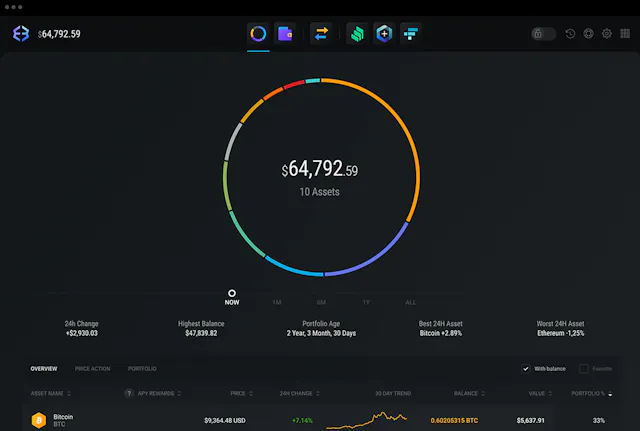
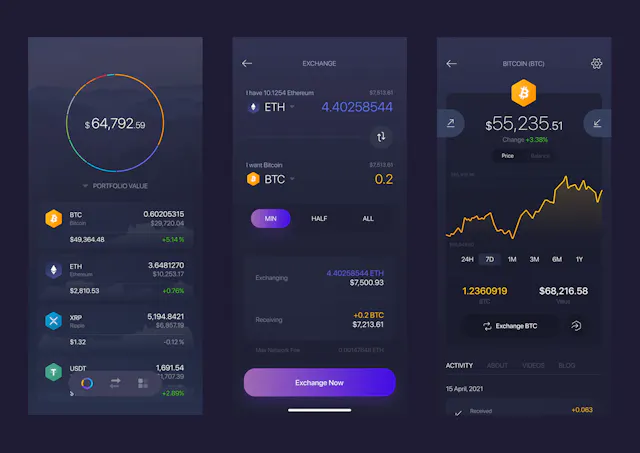
Exodus is a self-custody software wallet for desktop and mobile from Exodus Movement, Inc., launched in 2015. It keeps your secret key encrypted on your device and lets you swap, buy and stake crypto inside the app.
Informations




Pro's & Con's
- Self-custody: your secret key is encrypted on your device, and Exodus does not store it.
- Desktop and mobile: apps for Windows, macOS, Linux, iOS and Android.
- Swaps, buying and staking in the app: through third-party providers, with the amount you receive shown before you confirm.
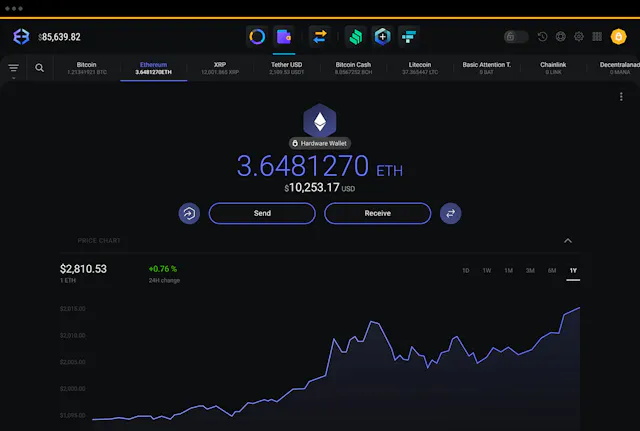
- Hardware wallet support: works with Ledger on mobile and Trezor on desktop.
- Support around the clock: in-app chat and email.
- Not fully open source: some components of Exodus are not open source.
- No two-factor authentication: the wallet itself has no two-factor login.
- Swap spread: swaps may include a spread on top of the network fee.
- No browser extension: support for the Exodus Web3 Wallet extension ended on October 1, 2026.
- No phone support: help comes by chat and email only.
Exodus Wallet
Hardware
Offer and features of
Exodus Wallet
Functionality
Unique Features
- Passkey backup on mobile
- Compatibility with Trezor
- Integration of apps
Platforms
Our
Exodus Wallet
Review
Our Rating

Conclusion
In our view, Exodus is one of the easier self-custody wallets for beginners: desktop and mobile apps, swaps, buying and staking in one place, and support around the clock by chat and email. It has no two-factor authentication for the wallet, only part of its code is open source, and its browser extension has been discontinued. For larger amounts we would pair it with a Ledger or Trezor hardware wallet.
Customer Reviews
/ 5 average rating from 0 reviews
Write a Review
Share your experience! Your review can help others make informed decisions. Let us know what worked well and what could be improved. Your feedback is valuable and will contribute to our community’s knowledge.
Exodus Wallet
User Reviews







Exodus Wallet users love it! It's sleek and super simple to use. Works like a dream on phones and computers too. Still, some enthusiasts want a few more ways to tweak it.
The Exodus Wallet has been praised for its range of uses. The wallet features a built-in online exchange where a diverse amount of cryptocurrencies can be stored.The feedback about the wallet is that it is fantastic that it has online exchange in it, It allows a vast variety of cryptocurrencies to be included,some customers were saying that they would like to have more analytical tools.
The Exodus Wallet carries numerous cryptocurrencies, such as Bitcoin or ethereum, but lacks support for less well-known ones. Some users request more ERC-20 tokens.
The Exodus Wallet is praised for its security measures, including the encryption of private keys on the user's device. However, there are also users who are concerned about the lack of support for two-factor authentication (2FA).
The Exodus Wallet is often described as particularly beginner-friendly. It offers easy setup and operation, which makes it a good choice for crypto newcomers. However, some users point out that despite the general user-friendliness, a certain training period is required.
Exodus Wallet support feedback is mixed. Some say service is fast, others say it's slow. Words include "unresolved" and "problems", quite frequent when looking at the reviews.
The Exodus Wallet gets good reviews. People like the way it looks. They like how it's easy to use, and how it has a lot of things to do. They like how it keeps safe most of the time. But there's no two-factor stuff in there. A lot of the people say things about it being easy for new users to work. And it'll help you if you ask for help too. Even so, these things don't all have good things to say. Some of them come out with good vibes. All in all, you kind of like it.
About
Exodus Wallet
Exodus Wallet
Exodus Wallet Review: Self-Custody, Fees, Security and Who It Suits
For beginners who want to hold their own keys, Exodus is in our view one of the easier software wallets to start with. Compatible with Windows, macOS, Linux, iOS, and Android, Exodus encrypts your 12-word secret key directly on your device. The app offers the ability to swap, buy, and stake all within its interface. However, it may not suit users seeking fully open-source code, two-factor authentication for the wallet itself, or a browser extension for decentralized apps, the latter of which Exodus stopped supporting on October 1, 2026.
What Exodus is
Exodus is a self-custody software wallet developed by Exodus Movement, Inc., headquartered in Omaha, Nebraska. This wallet was launched in 2015 by founders JP Richardson and Daniel Castagnoli. Its Class A shares are traded on the NYSE American under the ticker EXOD. The latest quarterly report shows it has 1.4 million monthly active users.
The wallet comes as a desktop app for Windows, macOS and Linux and as a mobile app for iOS and Android. The Exodus Web3 Wallet browser extension is gone: support ended on October 1, 2026, new users can no longer install it, and anyone who still has it can only view the secret key to move funds elsewhere.
Custody and backup
Exodus is a self-custodial wallet. Your 12-word secret key is encrypted and stored on your device. Exodus states it does not keep your secret key or private keys and cannot recover them. This is the trade-off with self-custody: only you manage your funds, and recovery is impossible without the key.
Every Exodus wallet uses a 12-word secret key from the standard BIP39 word list, though Exodus notes that not every other wallet can restore all assets from it. On mobile you can add a second backup with a passkey and iCloud or Google Drive. That backup only works in Exodus Mobile and only on a phone with the same operating system as the one you used to create it, so we would still write the 12 words down on paper.
Security and open source
Exodus does not offer two-factor authentication for the wallet itself. The security guide explains that since all wallet data is stored locally, two-factor authentication cannot be implemented. Security relies on your device, password, and secret key. Exodus advises using two-factor authentication for related accounts, like email and cloud storage.
Exodus is not fully open source. The company says the wallet is built on many open-source components but that some parts are not open, to make fake copies harder to build, and it publishes some of its open-source work on GitHub. Because fake wallets are a real risk, Exodus asks you to download only from exodus.com/download or the official app store listings, and it publishes release hashes with a PGP signature and signs every installer.
Supported assets
Exodus says it supports more than 50 crypto networks with unlimited token support on the most popular web3 networks, and you can add custom tokens on several networks. Coverage also changes over time: Exodus ended support for Monero on August 18, 2025, so it is not the wallet for XMR anymore.
Swaps, buying and fees
Sending crypto from Exodus costs only the network fee. Exodus says it does not charge or keep any part of that fee, and 100% of it goes to the network.
Swaps run through third-party providers within the app. These swaps might include a spread over the network fee, and Exodus displays the amount you will receive before confirmation. Its homepage indicates swap rates start as low as 0.5%. Swaps are executed at the current price only, without limit, stop-loss, or margin orders, and most swaps do not require identity verification.
Purchasing crypto is handled by third-party payment providers like MoonPay, Banxa, Ramp Network, PayPal, and Robinhood, depending on your location. Every purchase, regardless of value, requires identity verification with the provider. The price includes a processing fee and the network fee, both displayed before purchase. Selling is possible through MoonPay.
Staking
Staking certain assets in Exodus is possible through its third-party provider, Everstake. Users retain control of the staked coins since only the wallet can sign staking transactions. Availability of staking services depends on location. For those using a hardware wallet, Exodus Mobile supports staking from a Ledger or Trezor Safe 7 for some assets, although staking with a Trezor on Exodus Desktop is not available.
Hardware wallet support
Exodus offers Ledger support for its mobile app and Trezor support for its desktop app. Its staking guide includes Trezor Safe 7 on mobile. With either device, crypto management and swaps can be conducted within Exodus, while keys remain on the hardware wallet. For larger holdings, we believe this setup is beneficial.
Support
Exodus provides around-the-clock support via an in-app chatbot, where users can request human assistance and receive responses within a few hours, as well as through email. Phone or Telegram support is not available. Exodus warns that its staff will never request your secret key, private keys, or passwords.
Using Exodus in the US
Exodus's own buy service, XO Ramp, is available in the United States and Puerto Rico with a Visa or Mastercard debit card or Apple Pay, though not in New York or Vermont. Some newer features are region-limited: Exodus Markets, its tokenized stock trading, is not available in the US.
Who should look elsewhere
- You want two-factor authentication on the wallet itself.
- You only trust wallets whose full code is public.
- You need a browser extension to connect to decentralized apps on desktop.
- You want limit or stop-loss orders rather than swaps at the current price.
Alternatives
If you want your keys on a dedicated device, read our Ledger Nano X review; Exodus lists Ledger support for its mobile app. For a hardware wallet that we rate higher for range of functions, see our SafePal review. If you mainly need a mobile wallet for decentralized apps now that the Exodus extension is gone, compare Exodus Wallet vs Trust Wallet, or see Coinomi vs Exodus Wallet and our wallet overview.
Our verdict
We rate Exodus highest for operation and give it good marks for range of functions, fees, beginner friendliness and support; security and trust is its lowest score in our rating. For a first self-custody wallet on desktop or phone, we think it is a sound choice, and for larger sums we would pair it with a hardware wallet.
Questions about Exodus
Is Exodus a good wallet?
In our view it is a good first self-custody wallet: easy to use, available on desktop and mobile, with swaps, buying and staking in the app. If security matters most to you, pair it with a Ledger or Trezor hardware wallet.
Is Exodus wallet safe?
Exodus keeps your secret key encrypted on your device, without storing it. Hence, the security of your funds relies on your protection of the device and your 12-word secret key. The wallet lacks two-factor authentication, and only some of its code is open source.
Is Exodus a hardware wallet?
No. Exodus is a software wallet designed for desktop and mobile use. However, it is compatible with Ledger and Trezor hardware wallets.
Does Exodus charge fees?
Exodus charges no fee to send crypto; you pay the network fee. Swaps may include a spread, and purchases through payment providers include a processing fee, both shown before you confirm.
About the author
Ethan Parker is Senior Content Editor at Exchange Flow. He has followed crypto since 2015, from Bitcoin and Ethereum to the exchanges people use to buy and trade them.
...