


Do you have ideas or suggestions for changes? Then we look forward to your feedback! We make every effort to keep all metrics and information as up-to-date as possible. However, if you discover an error or outdated information, we would be delighted to hear from you.
Feel free to write to us:

Transferable to your own wallet
Self-custody of cryptocurrencies plays an important role for many users who want to manage their cryptocurrencies and thus their "private keys" themselves and not leave them in the hands of the exchange. Most exchanges offer the option of sending the purchased cryptocurrencies to their own wallet.
Deposit protection is a safeguard for the assets of users of a stock exchange or broker, which is intended to protect investors in the event of insolvency or a high loss due to a hacker attack. Service providers based in Germany are legally obliged to provide deposit protection of €100,000. In some cases, international exchanges have a special insurance policy that covers a certain portion of the assets instead of a deposit guarantee.
The overall rating is the average of our individual ratings. Our ratings do not constitute investment advice, but merely our personal opinion. You are welcome to use them as rough indicators and additional perspective. In the dynamic and fast-growing crypto sector, parameters can often change from one day to the next, so we cannot guarantee that the rating data is up to date. Therefore, please never use our ratings as an isolated basis for decision-making and not as a substitute for your own research.
This rating describes our personal assessment of the user-friendliness of the product. How easy is the onboarding process? How modern is the user interface and is it easy to use? Are all the important functions quick and easy to find? We ask ourselves all these questions in order to give a personal rating from 1 to 10 points.
This rating describes our assessment of the fee structure of a stock exchange or broker. It is not only the amount of fees that can differ, but also the type of fees. The most common type of fees for crypto exchanges are the "maker/taker" fees or spreads. In some cases, there are also hidden fees that are not recognizable to users at first glance.
For products or services in the crypto space, trust and security should be the biggest factors in the selection process. Since we could not seriously evaluate the technical security of a platform or product, we analyze publicly available factors such as security features, location, regulation, certifications, audits, team/company, general reputation and, of course, track record.
Crypto doesn't have to be cryptic. Especially for beginners, the first contact with the crypto world can be overwhelming. With this rating, we give our assessment of how easy it is for beginners to find their way around: from the onboarding process to using the most important functions.
Customer support is an important factor for many users. A long wait or no response at all in the event of problems can be frustrating, especially when it comes to sensitive topics such as finances. With this rating, we give our assessment of the quality of customer support. In order to provide as balanced an assessment as possible, we also include user opinions from other platforms in our evaluation.
Some exchanges and brokers are regulated by financial supervisory authorities in certain countries/states. This often entails strict financial regulatory requirements and compliance requirements to which the company must adhere. Regulatory clarity can contribute to greater transparency and thus also greater trustworthiness.









Coinbase vs Bitstamp in comparison
Overview

Bitstamp is a crypto exchange founded in 2011 and owned by Robinhood Markets, Inc. since June 2025. Bitstamp USA, Inc. serves US customers and holds a New York BitLicense; Bitstamp Europe S.A. serves the EEA under a MiCA authorization from Luxembourg's CSSF. The group parent, Bitstamp Ltd, has its registered office in London.

- Open in every US state, including New York under an NYDFS license
- Money transmitter licenses in 47 US jurisdictions, plus authorizations in Luxembourg, the UK and Canada
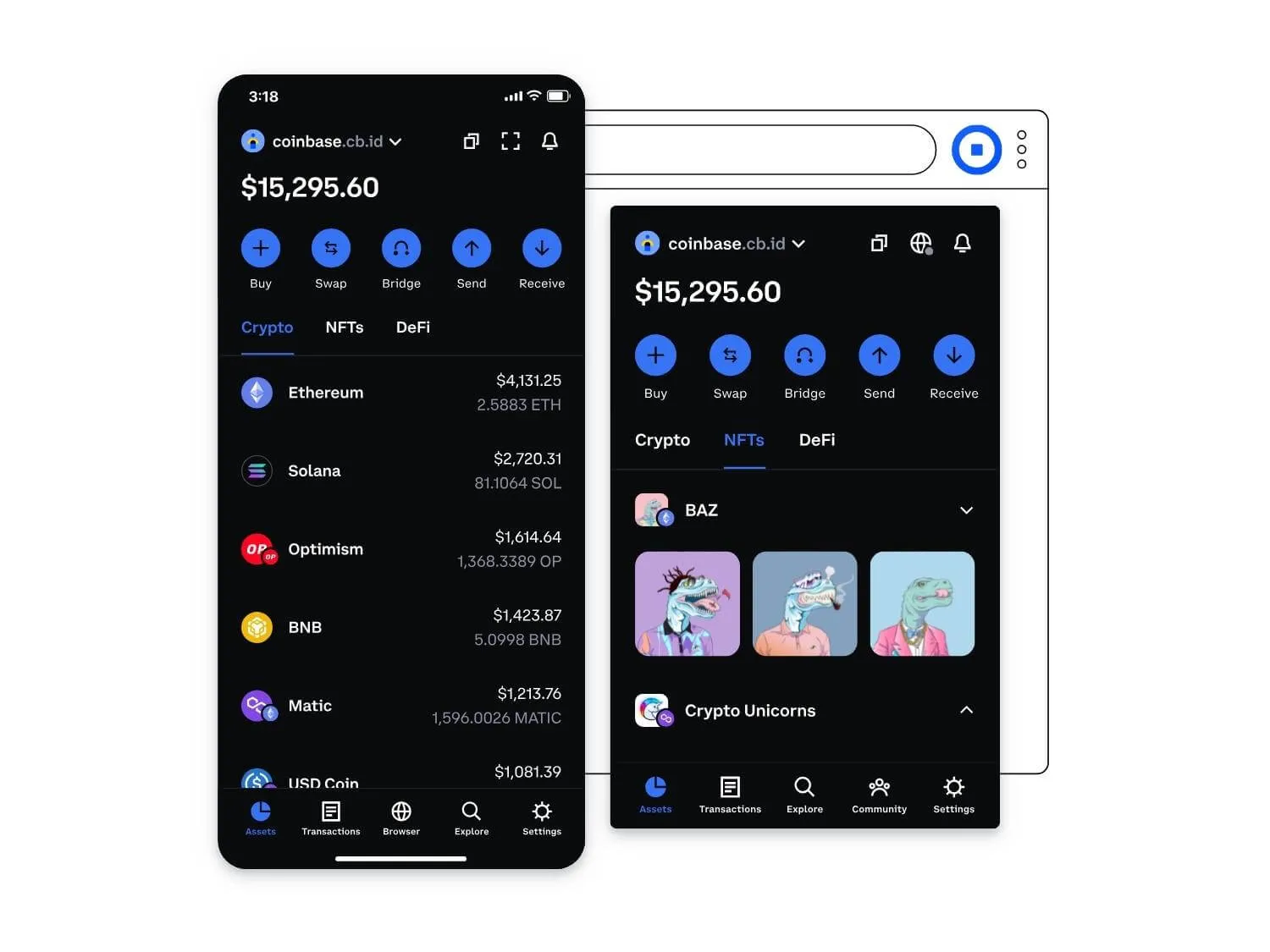
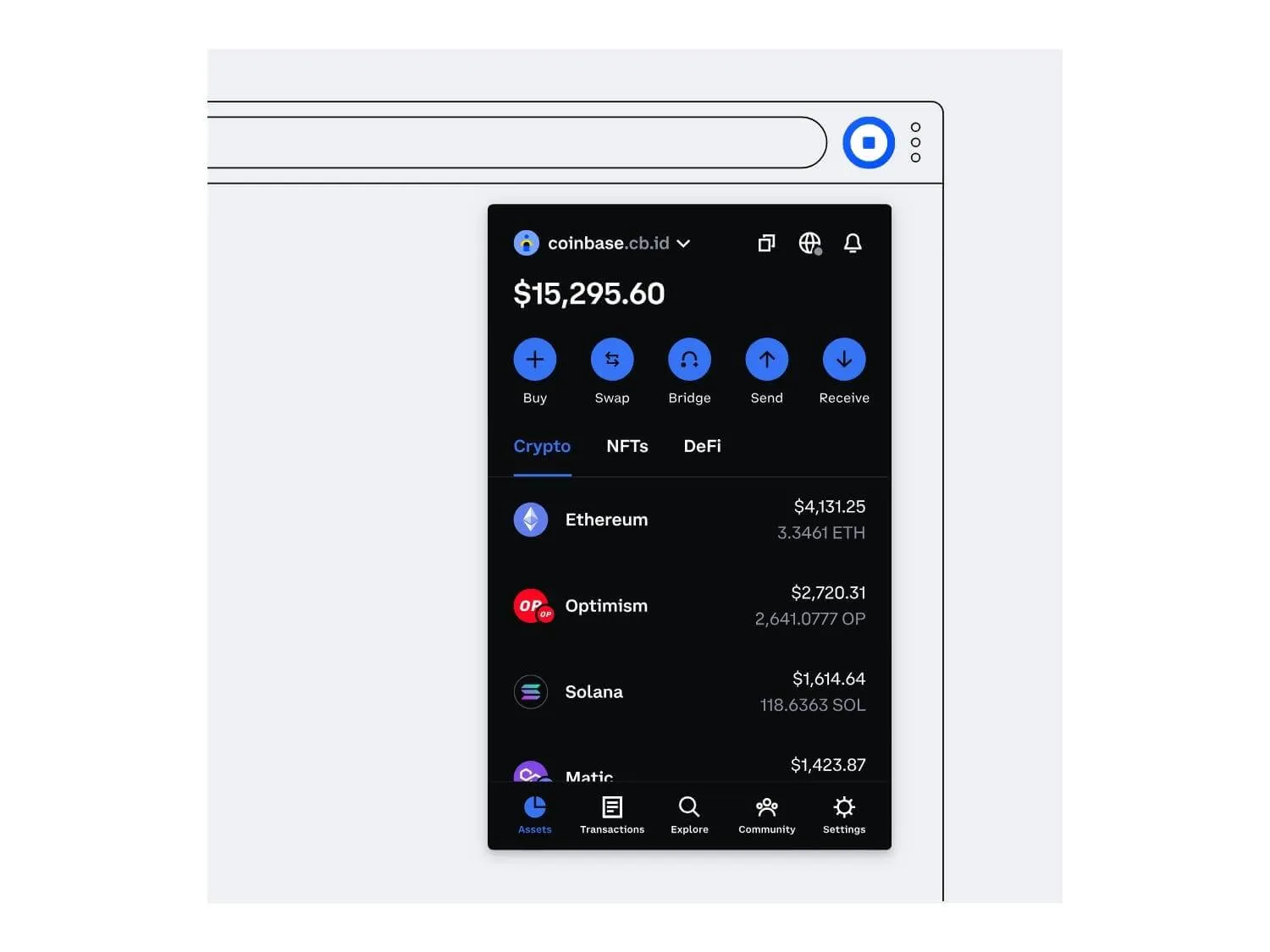
- Simple app for buying, plus Coinbase Advanced with TradingView charts and advanced order types
- More than 400 crypto assets with live markets, plus commission-free US stock trading 24/5
- Two-factor authentication switched on by default, with security key support
- Parent company listed on Nasdaq, with quarterly financial reports
- Higher entry-level fees than Kraken Pro: 0.50% maker and 0.90% taker on Coinbase Advanced in the US, against 0.40% and 0.80%
- Simple buys include a spread, and simple limit orders add a 1% execution fee
- Bitcoin and Ether futures for US customers go up to 10x leverage, so traders who want more look elsewhere
- No proof-of-reserves report for exchange balances that we could find
- Available in New York, where Bitstamp USA holds a BitLicense
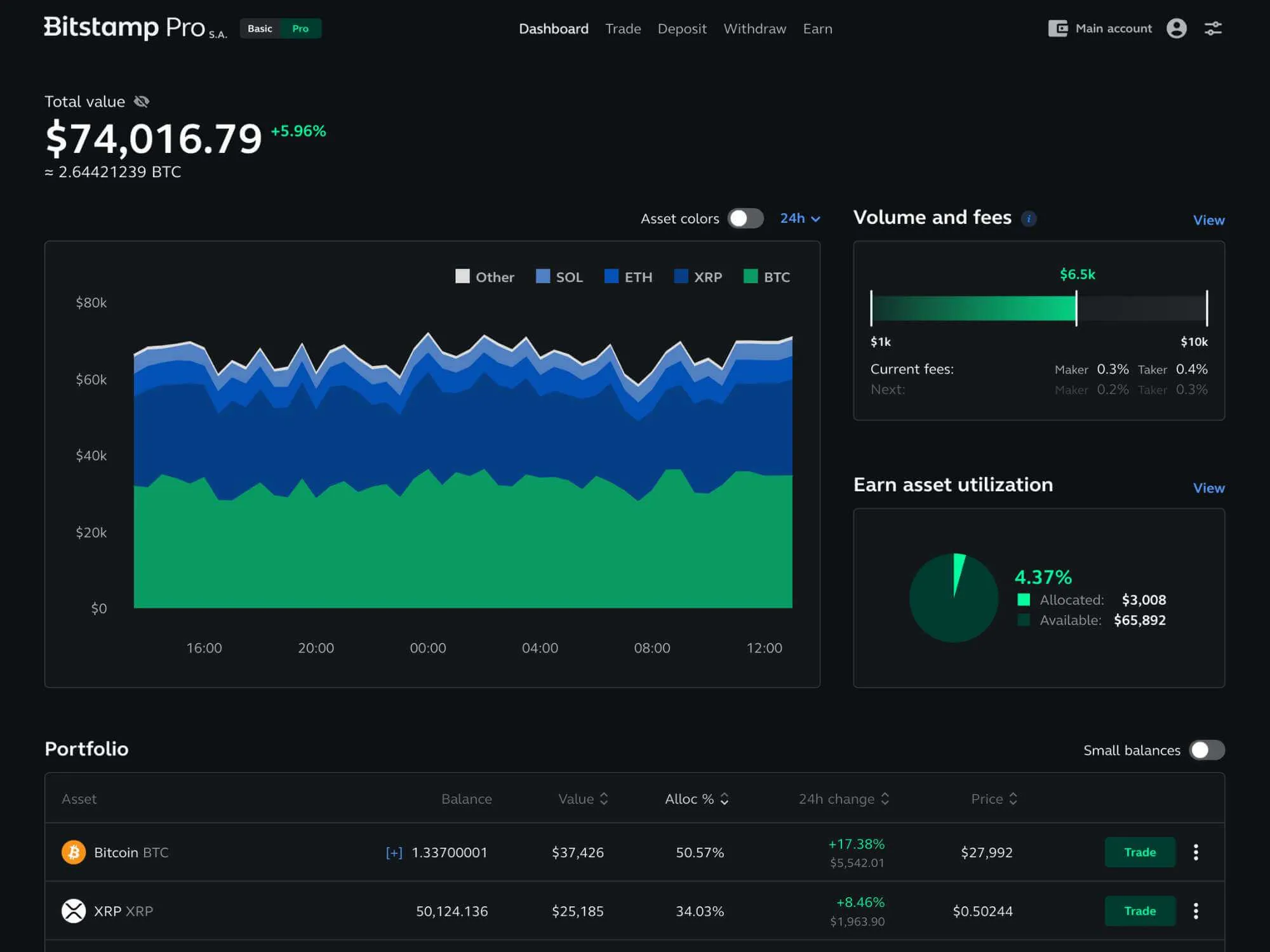
- Entry-tier spot fees of 0.30% maker and 0.40% taker, below Kraken Pro and Coinbase Advanced
- Licensed or registered in the US, the EU, the UK and Singapore
- Free ACH transfers and free crypto deposits
- No staking, lending or derivatives for US customers
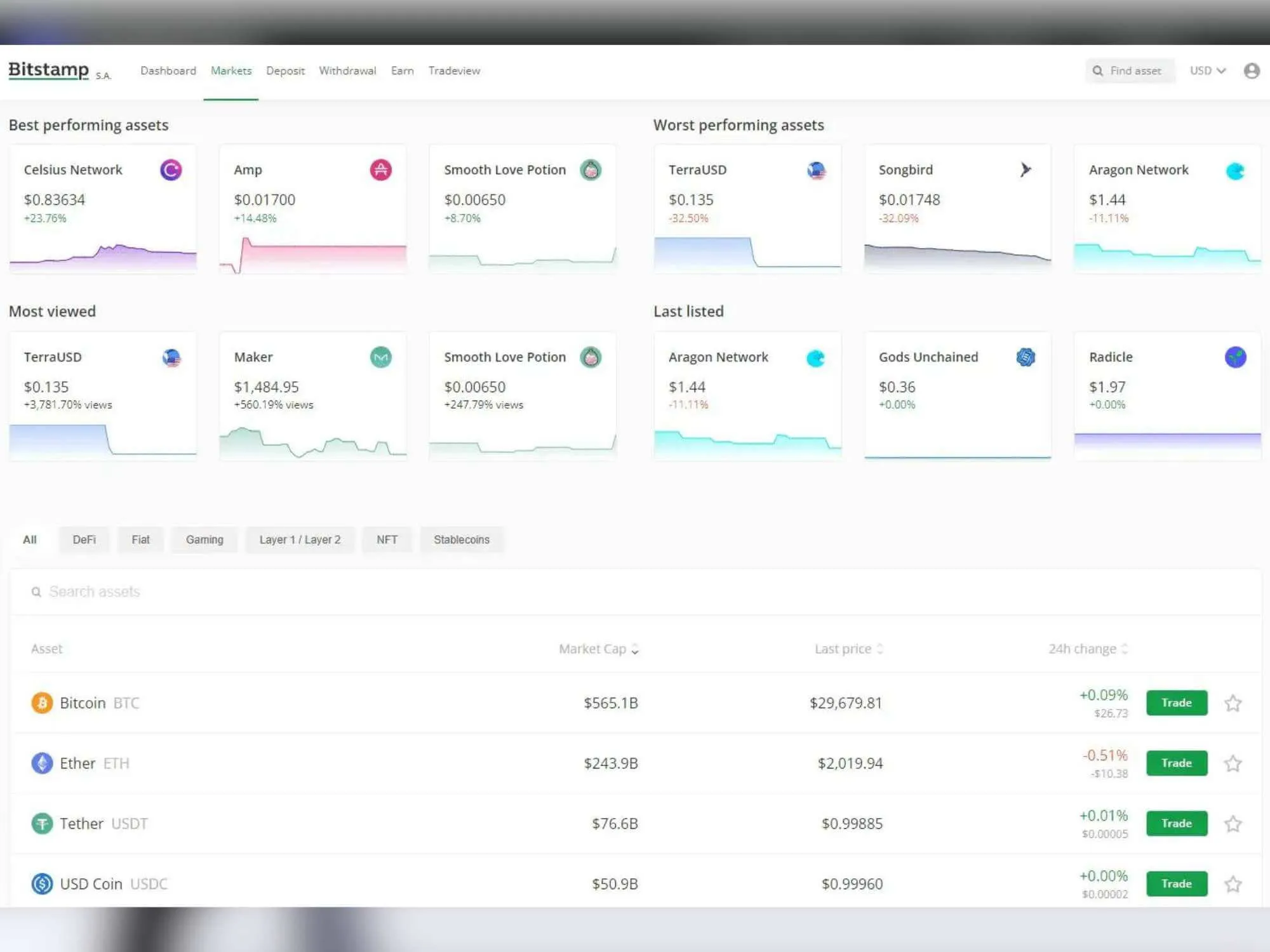
- 114 crypto assets, far fewer than Kraken or Coinbase
- Card purchases cost 4%, Basic Trading a 1.8% spread
- No proof-of-reserves report that we could find
Features Comparison
- Cryptocurrencies
- Cryptocurrencies
0.9
%
0.90%
0.50%
Varies
0.4
%
0.40%
0.30%
Varies
407
+


$
2
114
+
$
10


Exchange Rating

Functions


- Spot, futures trading options
- Coinbase Card
- Coinbase Wallet
- Bitstamp Earn
- Trading view
Company Details


Our Review
Coinbase is a US-listed exchange accessible to residents in every US state, with regulatory licenses in the US, Luxembourg, and the UK. In our view it is a good place for a first crypto purchase, with a simple app and a regulated operator. Active traders can pay less: we would compare Kraken Pro first, whose entry-level taker fee is 0.80%, against 0.90% on Coinbase Advanced in the US.
Bitstamp suits US residents in the states it serves, New York included, and traders in the EU and the UK who want a long-running, licensed exchange with low order-book fees: 0.30% maker and 0.40% taker at the entry tier. In our view, Kraken suits active traders who need margin or futures better.

American Trust vs European Reliability
Coinbase built trust through U.S. regulation and a public listing. Bitstamp built trust through over a decade of reliable operation since 2011. Both prioritize reliability, and both serve customers in the US and in Europe.
Trust Credentials
Coinbase is a publicly listed company with U.S. regulatory compliance. It scores 9/10 on security and trust.
Bitstamp has operated since 2011—one of the oldest exchanges still running. It scores 9/10 on security with regulation and proven track record.
Beginner Experience
Coinbase scores 10/10 for beginner friendliness. The platform is designed for first-time buyers.
Bitstamp scores 8/10—functional but built more for experienced traders.
Fee Comparison
Coinbase Advanced charges US customers 0.50% maker and 0.90% taker at the entry level. Bitstamp starts at 0.30% maker and 0.40% taker, less than half the Coinbase taker fee. Active traders prefer Bitstamp's economics.
Coin Selection
Coinbase lists about 400 cryptocurrencies. Bitstamp offers about 115. Coinbase has more selection.
Regional Fit
Coinbase optimizes for U.S. users with dollar operations. Bitstamp serves European markets well and, through Bitstamp USA, every US state except Hawaii and Nevada.
Your Choice
Coinbase at 8.3 suits American beginners who want maximum simplicity and don't mind premium fees.
Bitstamp at 8.1 suits experienced traders who want lower fees and proven reliability.
About the author
At Exchange Flow, Ethan is recognized as the resident crypto expert. With 10+years of experience navigating the waters of global crypto exchanges, Ethan is a trusted voice in the ever-evolving world of digital currencies. He tests and scrutinizes exchanges so you don’t have to, offering reviews and articles that newbies and seasoned traders alike find invaluable. When he’s not coding, Ethan likes to travel and play retro games. He uses his crypto earnings to fund his trip around the globe.