


Do you have ideas or suggestions for changes? Then we look forward to your feedback! We make every effort to keep all metrics and information as up-to-date as possible. However, if you discover an error or outdated information, we would be delighted to hear from you.
Feel free to write to us:

Transferable to your own wallet
Self-custody of cryptocurrencies plays an important role for many users who want to manage their cryptocurrencies and thus their "private keys" themselves and not leave them in the hands of the exchange. Most exchanges offer the option of sending the purchased cryptocurrencies to their own wallet.
Deposit protection is a safeguard for the assets of users of a stock exchange or broker, which is intended to protect investors in the event of insolvency or a high loss due to a hacker attack. Service providers based in Germany are legally obliged to provide deposit protection of €100,000. In some cases, international exchanges have a special insurance policy that covers a certain portion of the assets instead of a deposit guarantee.
The overall rating is the average of our individual ratings. Our ratings do not constitute investment advice, but merely our personal opinion. You are welcome to use them as rough indicators and additional perspective. In the dynamic and fast-growing crypto sector, parameters can often change from one day to the next, so we cannot guarantee that the rating data is up to date. Therefore, please never use our ratings as an isolated basis for decision-making and not as a substitute for your own research.
This rating describes our personal assessment of the user-friendliness of the product. How easy is the onboarding process? How modern is the user interface and is it easy to use? Are all the important functions quick and easy to find? We ask ourselves all these questions in order to give a personal rating from 1 to 10 points.
This rating describes our assessment of the fee structure of a stock exchange or broker. It is not only the amount of fees that can differ, but also the type of fees. The most common type of fees for crypto exchanges are the "maker/taker" fees or spreads. In some cases, there are also hidden fees that are not recognizable to users at first glance.
For products or services in the crypto space, trust and security should be the biggest factors in the selection process. Since we could not seriously evaluate the technical security of a platform or product, we analyze publicly available factors such as security features, location, regulation, certifications, audits, team/company, general reputation and, of course, track record.
Crypto doesn't have to be cryptic. Especially for beginners, the first contact with the crypto world can be overwhelming. With this rating, we give our assessment of how easy it is for beginners to find their way around: from the onboarding process to using the most important functions.
Customer support is an important factor for many users. A long wait or no response at all in the event of problems can be frustrating, especially when it comes to sensitive topics such as finances. With this rating, we give our assessment of the quality of customer support. In order to provide as balanced an assessment as possible, we also include user opinions from other platforms in our evaluation.
Some exchanges and brokers are regulated by financial supervisory authorities in certain countries/states. This often entails strict financial regulatory requirements and compliance requirements to which the company must adhere. Regulatory clarity can contribute to greater transparency and thus also greater trustworthiness.









Bitpanda vs Kraken in comparison
Overview

Kraken is a cryptocurrency exchange that was established in 2011 and is operated by Payward, Inc., a Delaware corporation. It holds licenses or registrations in the US, the EU, the UK, Canada, and Australia, with MiCA authorization in the EU through the Central Bank of Ireland. The exchange's Wyoming bank, Kraken Financial, was granted its charter in 2020.

- MiCA authorization from Austria's FMA, plus BaFin and MFSA authorizations for group companies
- Crypto, stocks, ETFs, precious metals and crypto indices in one account
- Bitpanda Fusion fees fall from 0.25% to 0.02% with volume
- Free SEPA deposits in euros and a €1 minimum order
- Savings plans and staking with weekly rewards
- Broker fees of 0.99% to 2.49% built into the price
- No futures, and margin trading is long-only
- No proof-of-reserves report found
- PayPal deposits cost 1.49%
- Stocks, ETFs and metals not offered on the UK platform
- Licensed or registered in the US, the EU, the UK, Canada, and Australia
- Proof of reserves from 100.3% to 102.9% for BTC, ETH, SOL, XRP, and ADA (30 June 2026)
- Kraken Pro fees decrease with 30-day volume or balance, to 0% maker
- Free ACH and SEPA deposits starting at 1 USD or 1 EUR
- Staking, stocks, and some transfers vary by US state
- No insurance on crypto holdings
- Entry tier 0.40% maker and 0.80% taker. App instant buys 1% plus spread
- Debit card deposits cost $0.25 plus 3.75%
Features Comparison
- Cryptocurrencies
- Stocks
- ETFs
- Crypto indices
- Precious metals
- Cryptocurrencies
- Derivatives
0.99
%
0.25%
0.25%
Varies
0.8
%
0.80%
0.40%
Varies
568
+


$
10
629
+

$
1


- Replaced BEST and PAN in July 2025
- Utility across Bitpanda Web3 products
Exchange Rating

Functions


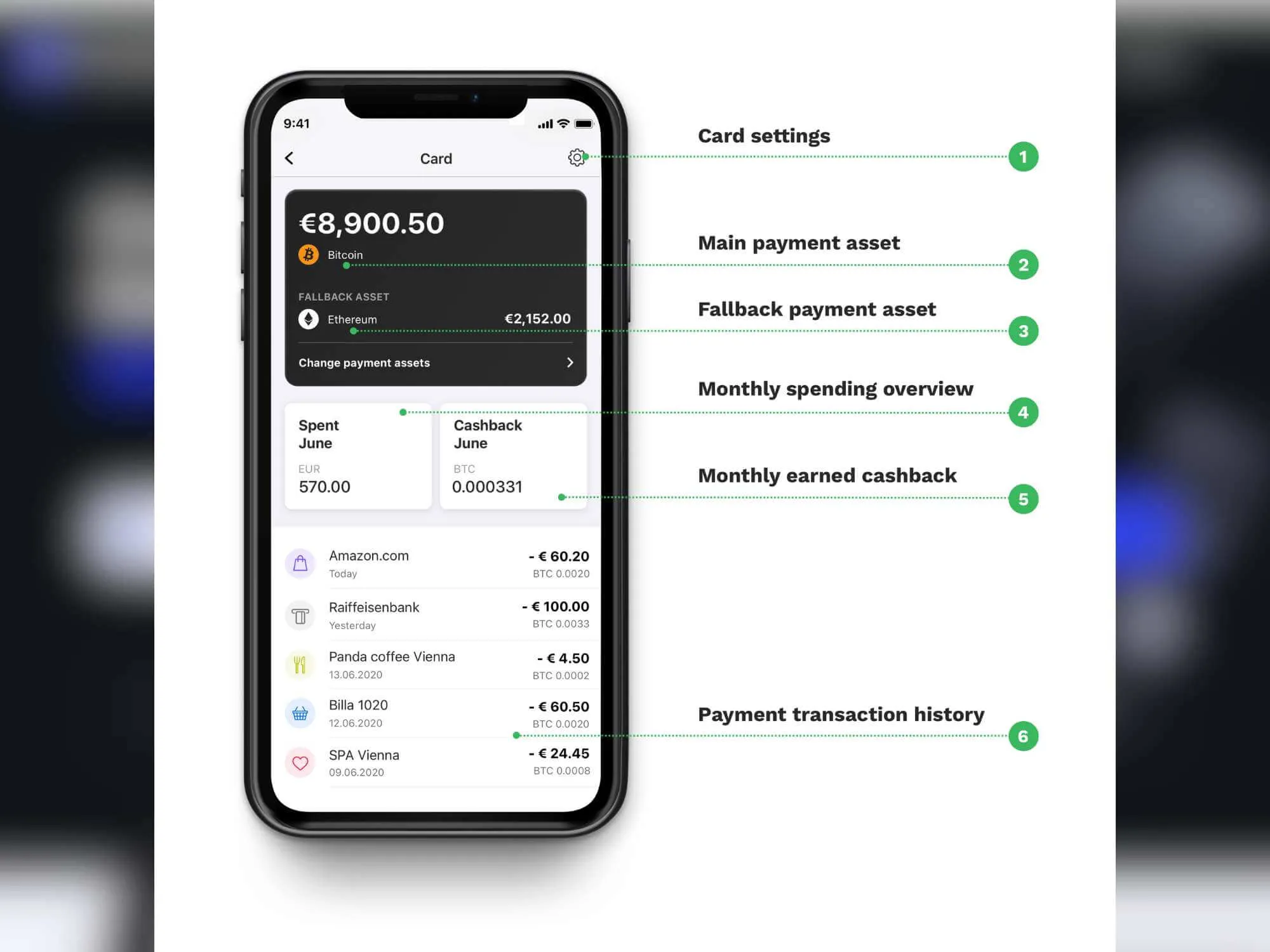
- Crypto debit card (Visa)
- Crypto indices
- Monthly savings plan
- Margin trading with up to 10x leverage
- Copy trading
Company Details

Our Review
Kraken suits traders in most US states, the EU, the UK, Canada, and Australia who seek a long-running, licensed exchange with order-book trading and proof of reserves. Kraken Pro begins at 0.40% for makers and 0.80% for takers, with fees decreasing as trading volume increases, while instant buys in the app incur a cost of 1% plus a spread. In our view, Coinbase may be preferable for new users.

Simplicity vs Banking-Grade Security
In our view, Bitpanda is the preferable choice for residents of Europe who want a straightforward initial purchase and enjoy holding stocks, ETFs, and precious metals alongside their cryptocurrency. We think Kraken is a better option for those who trade frequently and seek an order book with margin and futures on Kraken Pro, or a more extensive list of crypto assets. We rate Bitpanda higher overall, primarily due to its ease of use and support. For US readers, the decision is straightforward: Bitpanda is not available in the US, while Kraken accepts residents from every state except New York and Maine.
What you pay on each side
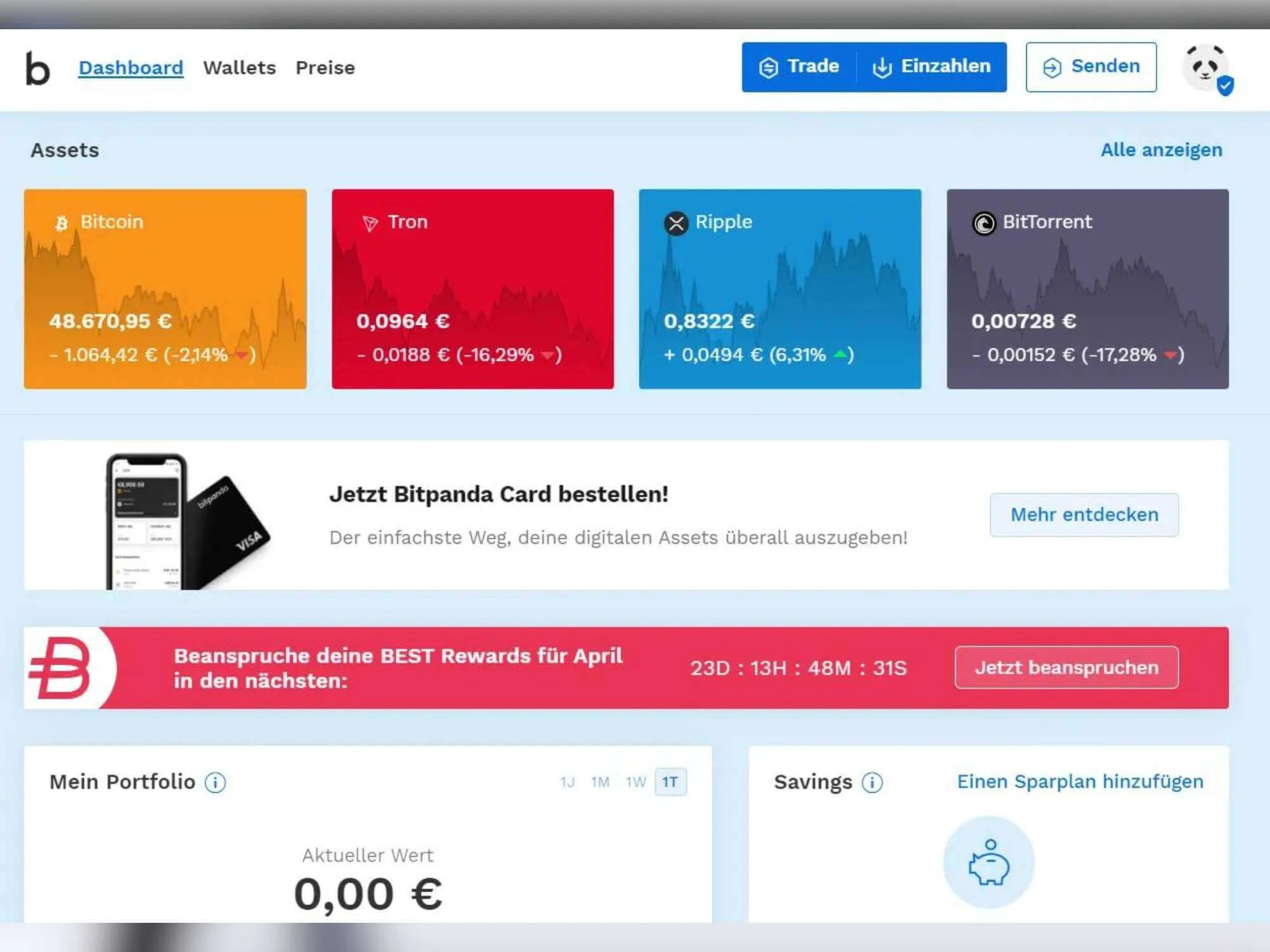
In the standard Bitpanda app, the fee is embedded in the quoted price: 0.99% for Bitcoin and stablecoins, 1.49% for other crypto assets, and 2.49% for coins with a market cap under EUR 100 million and for Spotlight assets. Bitpanda Fusion, which aggregates the order books of 12+ venues, charges a flat rate of 0.25% per trade at Level 1.
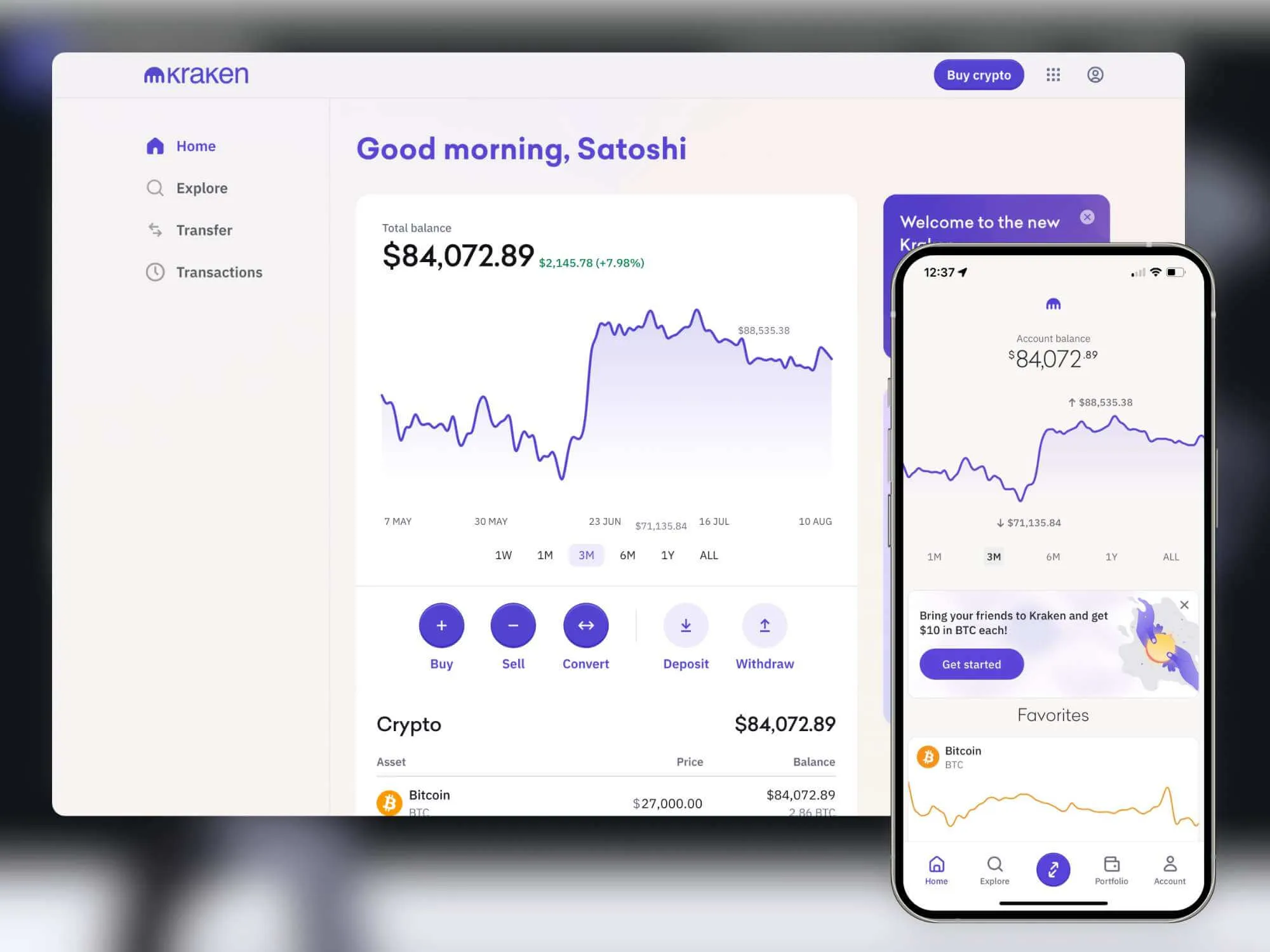
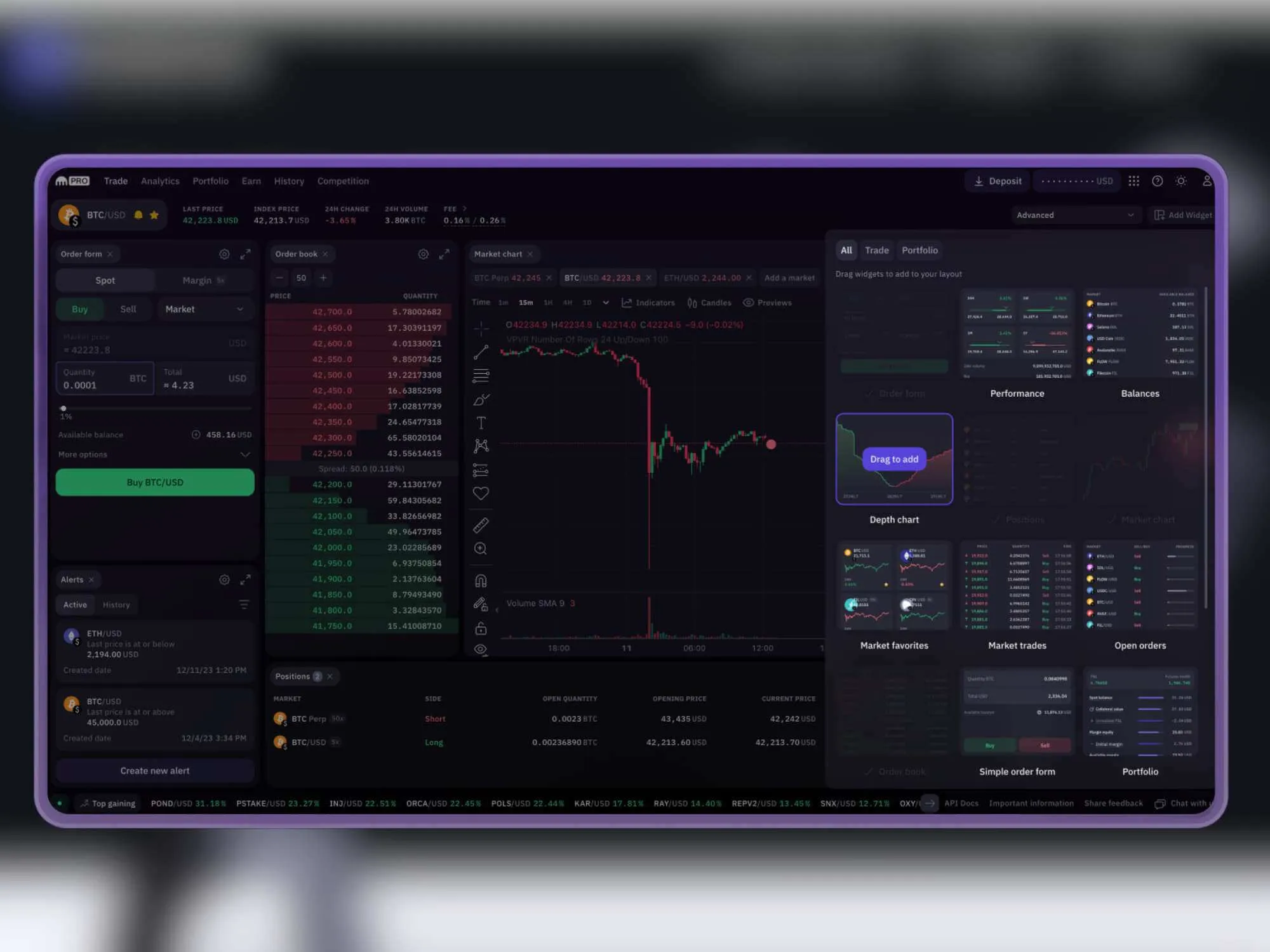
The Kraken app charges 1% on instant and recurring buys, with a spread factored into the price. Kraken Pro begins with 0.40% for makers and 0.80% for takers, with both rates decreasing based on your 30-day volume or the assets held on Kraken, reducing to a 0% maker fee at the highest tiers.
We rate Kraken higher on fees and costs, mainly because of the app: outside the Bitcoin and stablecoin tier, Kraken's 1% fee, before the spread, sits below Bitpanda's 1.49% and 2.49%. In our view the order books are closer. Fusion's 0.25% undercuts both Kraken Pro starting rates, and Kraken Pro becomes cheaper for maker orders once your 30-day volume passes $10K, where its maker fee drops to 0.22%.
Coins, asset classes and extras
Kraken has the deeper crypto list, with 629 crypto assets. Bitpanda lists fewer coins, but its main platform adds real stocks, ETFs and ETCs, precious metals and crypto indices, the indices with a 1.99% fee on their automatic trades. Kraken's stock offer depends on where you live: US stocks and ETFs for US clients in select states, and tokenized xStocks outside the US, the UK, Canada and Australia.
Bitpanda savings plans start at €10 per purchase, and both platforms retain 20% of rewards as commission on staking, with Kraken applying this to its flexible staking. Leverage tilts toward Kraken, where Kraken Pro offers spot margin up to 10x alongside futures. Bitpanda's crypto margin also reaches 10x but only supports long positions.
We rate Bitpanda higher for range of functions; for crypto depth and derivatives alone, Kraken is the stronger venue in our view.
Regulation, custody and track record
Bitpanda was founded in Vienna in 2014 and holds its MiCA authorization through Bitpanda GmbH from Austria's FMA. Bitpanda says most client crypto sits in air-gapped cold storage. In 2026 the FMA fined Bitpanda GmbH €70,000 for MiCAR breaches tied to a crypto-asset white paper and its marketing.
Kraken has operated since 2011 and is authorized under MiCA in the EU by the Central Bank of Ireland. It publishes proof of reserves, showing a 102.9% reserve ratio for BTC in its latest snapshot. Kraken paid $30 million to settle SEC charges related to its US staking program in 2023, and a subsequent SEC lawsuit was dismissed in 2025. Kraken indicates that digital assets on its platform are not insured.
We consider them equal in terms of security and trust: Kraken offers a longer history and published reserves but has more settlements, while Bitpanda has one regulatory fine, the FMA penalty from 2026.
Ease of use and support
We rate Bitpanda higher for beginners, everyday operation and support. Its standard app shows one price with the fee included and holds that quote for 20 seconds for most assets, and the cheaper Fusion rates are one switch away in the same app. Kraken's lower fees live in Kraken Pro, a separate app from the Kraken app with its 300+ assets, though one login covers both; in our view that asks more of a beginner. Bitpanda states that its support is available 24/7, with live chat once you log in.
Where you can use Bitpanda and Kraken
Bitpanda is not available in the US: its user agreement lists the United States of America among restricted jurisdictions. Kraken accepts US residents in every state except New York and Maine, though staking, stocks and Krak transfers depend on the state. If you live in the US, our list of exchanges for US customers compares more options.
Both serve the EEA: Bitpanda passports its Austrian license to 29 further EEA states, and Kraken passports its Irish licenses to all EEA countries. UK residents can join either, but Bitpanda's UK platform offers crypto only, without stocks, ETFs or precious metals, and caps margin at 3x. On reach, Kraken wins in our view, since it also serves Canada and Australia.
Our verdict by reader
- First-time buyer in Europe: in our view Bitpanda is the easier start, with one all-in price per purchase and stocks and ETFs in the same app for later.
- Active or frequent trader: Kraken, in our view, for the Kraken Pro order book, futures and maker fees that fall with volume. For small amounts, Bitpanda Fusion's flat 0.25% costs less.
- Long-term saver using savings plans: Bitpanda, in our view, with plans from €10 per purchase.
- US resident: Kraken, unless you live in New York or Maine, because Bitpanda is unavailable in the US.
- UK resident: Kraken, in our view, because Bitpanda's UK platform drops the stocks and ETFs that set it apart elsewhere.
If neither fits, compare costs in our list of exchanges with low fees, trading tools in our exchanges for day trading and first steps in our exchanges for beginners. American beginners can weigh Kraken against Coinbase in Coinbase vs Kraken, and European savers can set Bitpanda against Bitvavo in Bitvavo vs Bitpanda. Our Bitpanda review and Kraken review cover each provider in full.
Questions about Bitpanda and Kraken
Is Kraken or Bitpanda better for beginners in Europe?
Bitpanda, which we rate higher for beginners: the fee is included in the price you see.
Is Kraken cheaper than Bitpanda?
The answer varies. In the apps, Kraken's 1% fee beats Bitpanda's 1.49% and 2.49% tiers for most coins except Bitcoin. For order books, Bitpanda Fusion's 0.25% is lower than Kraken Pro's maker and taker fees of 0.40% and 0.80%.
Which has more cryptocurrencies?
Kraken, with 629 crypto assets. Bitpanda lists fewer coins but features real stocks, ETFs, ETCs, and precious metals on its main platform.
About the author
At Exchange Flow, Ethan is recognized as the resident crypto expert. With 10+years of experience navigating the waters of global crypto exchanges, Ethan is a trusted voice in the ever-evolving world of digital currencies. He tests and scrutinizes exchanges so you don’t have to, offering reviews and articles that newbies and seasoned traders alike find invaluable. When he’s not coding, Ethan likes to travel and play retro games. He uses his crypto earnings to fund his trip around the globe.