


Do you have ideas or suggestions for changes? Then we look forward to your feedback! We make every effort to keep all metrics and information as up-to-date as possible. However, if you discover an error or outdated information, we would be delighted to hear from you.
Feel free to write to us:

Transferable to your own wallet
Self-custody of cryptocurrencies plays an important role for many users who want to manage their cryptocurrencies and thus their "private keys" themselves and not leave them in the hands of the exchange. Most exchanges offer the option of sending the purchased cryptocurrencies to their own wallet.
Deposit protection is a safeguard for the assets of users of a stock exchange or broker, which is intended to protect investors in the event of insolvency or a high loss due to a hacker attack. Service providers based in Germany are legally obliged to provide deposit protection of €100,000. In some cases, international exchanges have a special insurance policy that covers a certain portion of the assets instead of a deposit guarantee.
The overall rating is the average of our individual ratings. Our ratings do not constitute investment advice, but merely our personal opinion. You are welcome to use them as rough indicators and additional perspective. In the dynamic and fast-growing crypto sector, parameters can often change from one day to the next, so we cannot guarantee that the rating data is up to date. Therefore, please never use our ratings as an isolated basis for decision-making and not as a substitute for your own research.
This rating describes our personal assessment of the user-friendliness of the product. How easy is the onboarding process? How modern is the user interface and is it easy to use? Are all the important functions quick and easy to find? We ask ourselves all these questions in order to give a personal rating from 1 to 10 points.
This rating describes our assessment of the fee structure of a stock exchange or broker. It is not only the amount of fees that can differ, but also the type of fees. The most common type of fees for crypto exchanges are the "maker/taker" fees or spreads. In some cases, there are also hidden fees that are not recognizable to users at first glance.
For products or services in the crypto space, trust and security should be the biggest factors in the selection process. Since we could not seriously evaluate the technical security of a platform or product, we analyze publicly available factors such as security features, location, regulation, certifications, audits, team/company, general reputation and, of course, track record.
Crypto doesn't have to be cryptic. Especially for beginners, the first contact with the crypto world can be overwhelming. With this rating, we give our assessment of how easy it is for beginners to find their way around: from the onboarding process to using the most important functions.
Customer support is an important factor for many users. A long wait or no response at all in the event of problems can be frustrating, especially when it comes to sensitive topics such as finances. With this rating, we give our assessment of the quality of customer support. In order to provide as balanced an assessment as possible, we also include user opinions from other platforms in our evaluation.
Some exchanges and brokers are regulated by financial supervisory authorities in certain countries/states. This often entails strict financial regulatory requirements and compliance requirements to which the company must adhere. Regulatory clarity can contribute to greater transparency and thus also greater trustworthiness.









Bitpanda vs Trade Republic in comparison
Overview

- MiCA authorization from Austria's FMA, plus BaFin and MFSA authorizations for group companies
- Crypto, stocks, ETFs, precious metals and crypto indices in one account
- Bitpanda Fusion fees fall from 0.25% to 0.02% with volume
- Free SEPA deposits in euros and a €1 minimum order
- Savings plans and staking with weekly rewards
- Broker fees of 0.99% to 2.49% built into the price
- No futures, and margin trading is long-only
- No proof-of-reserves report found
- PayPal deposits cost 1.49%
- Stocks, ETFs and metals not offered on the UK platform

- 50 cryptos as real coins that you can send to your own wallet
- A flat €1 fee per trade and free crypto savings plans
- Staking for SOL, ETH, DOT and more at no extra fee
- Crypto, stocks, ETFs, a current account and a card in one app from a German bank
- Orders from 1 euro and no minimum investment amount
- The size of the crypto spread is not published on the website
- The €1 fee weighs heavily on small orders
- A short coin list compared with crypto exchanges
- No proof of reserves that we could find, and no private keys of your own in the app
- Only for residents of 18 European countries

Features Comparison
- Cryptocurrencies
- Stocks
- ETFs
- Crypto indices
- Precious metals
- Cryptocurrencies
- Stocks
- ETFs
- Derivatives
0.99
%
0.25%
0.25%
Varies
0
%
€1
€1
Varies
568
+


$
10
50
+

$
1


- Replaced BEST and PAN in July 2025
- Utility across Bitpanda Web3 products
Exchange Rating

Functions


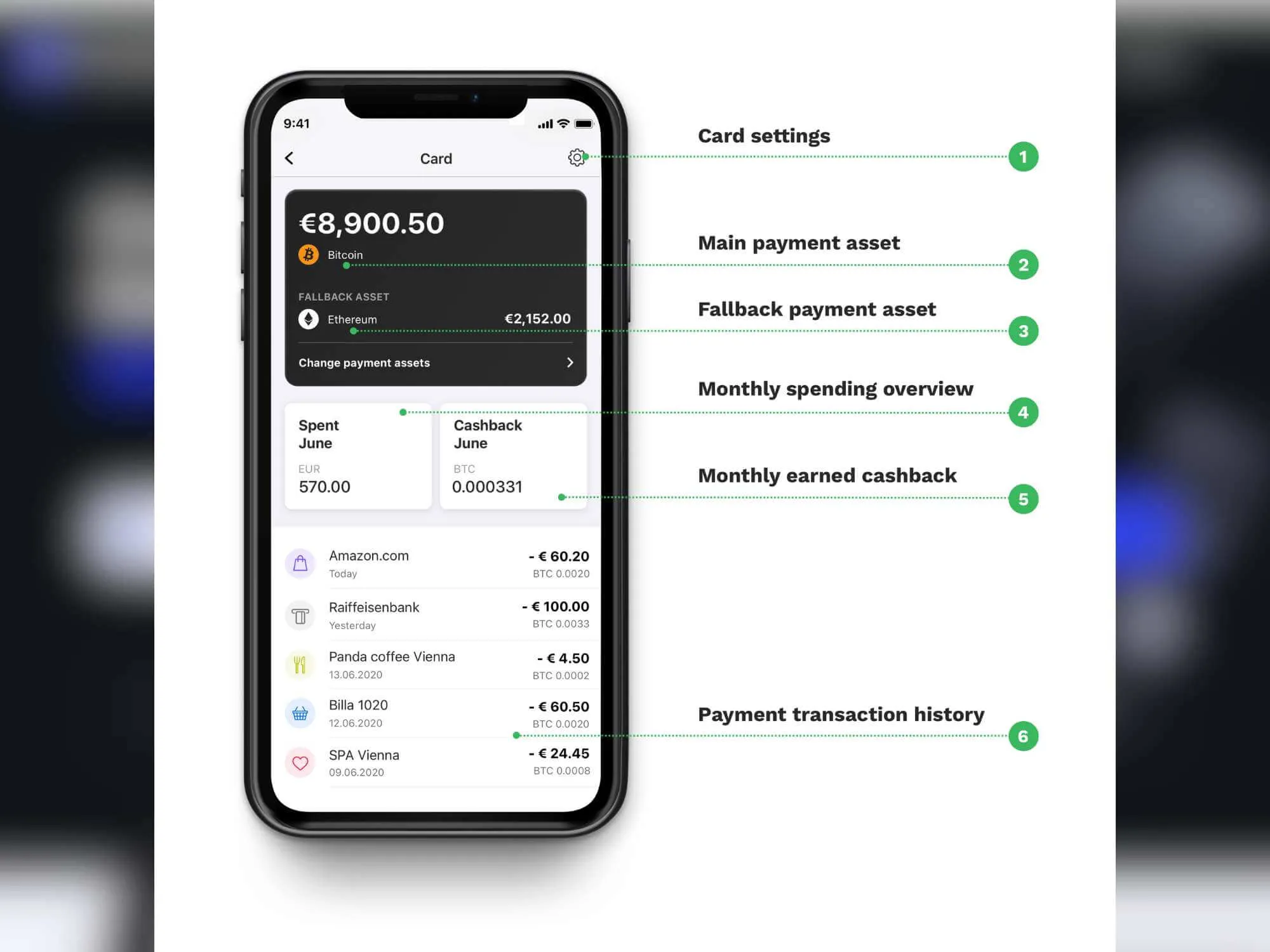
- Crypto debit card (Visa)
- Crypto indices
- Monthly savings plan
- Free savings plans
- Crypto transfers to and from external wallets
- Crypto staking
- Web Terminal for stocks and derivatives
Company Details


Crypto-Focused vs Investment App

In our view, Bitpanda is the better choice if your primary focus is buying crypto, whereas Trade Republic might suit you more if crypto is just an additional asset alongside stocks and ETFs within a banking app. Bitpanda offers a significantly higher number of coins compared to Trade Republic's 50 and applies a fee of 0.25% per trade on Bitpanda Fusion at its initial tier. On the other hand, Trade Republic has a trading fee of €1 per trade, plus a spread not published on its website, but provides free execution of crypto savings plans. Note that neither option is available to US customers, as both exclude residents of the United States.
A crypto platform or a bank with crypto
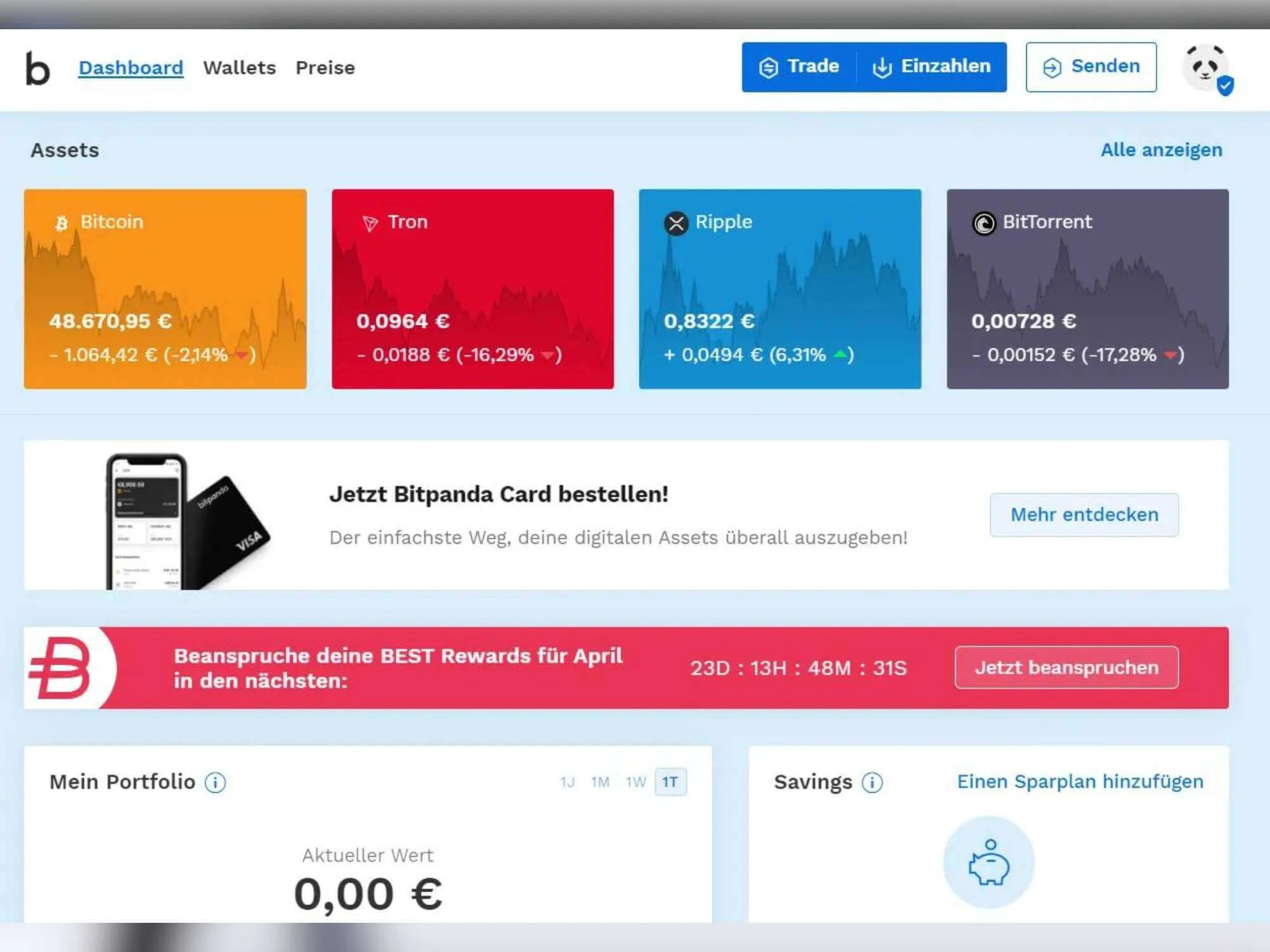
Bitpanda, based in Vienna, Austria, centers its operations around cryptocurrency. In addition to coins, it offers real stocks, ETFs, and ETCs. Bitpanda Fusion provides an order-book screen connected to 12+ trading venues and over 2,000 trading pairs. The platform also supports crypto margin trading, limited to long positions, with up to 10x leverage.
Trade Republic is a German bank that includes cryptocurrency as part of a broader offering: 11,500 stocks and ETFs, a current account, a Visa debit card, and interest on cash, 2.5% in Germany. Its crypto segment includes 50 cryptocurrencies, held as real coins in custody.
We rate the two equally for beginners and give Trade Republic a small edge on operation. On range of functions, we rate Bitpanda clearly ahead.
What a crypto trade costs
Bitpanda's standard app incorporates a broker premium into the quoted price, displayed separately in the trade summary: 0.99% for Bitcoin, 1.49% for other crypto assets, and 2.49% for small-cap coins and Spotlight assets. On Bitpanda Fusion, the initial level covers up to €100,000 in 30-day volume with a cost of 0.25% per trade, without differentiating between maker and taker orders.
Trade Republic charges no commission on crypto, but each one-off order carries a €1 settlement fee, and the price you see includes a spread whose size Trade Republic does not publish on its website; the full price list sits in the app. Crypto savings plans run with no execution fee and start from €1, against €10 per purchase for Bitpanda's savings plans. A fixed €1 weighs more on a small order than on a large one, so small monthly amounts go further through the plans.
We rate Bitpanda higher on fees and costs. Its public disclosure of crypto fee tiers before sign-up provides transparency, whereas Trade Republic reveals full crypto costs only once you access the app.
Coin range, staking and your own wallet
Bitpanda offers a coin list significantly longer than Trade Republic's 50, which in our view makes it the better choice for altcoin buyers. Both platforms offer staking rewards. Bitpanda retains 20% as commission, while Trade Republic states that it charges no additional staking fee.
Since November 2025, Trade Republic lets you send all 50 of its cryptos to an external wallet and receive them from one, with no Trade Republic fee on top of the network fee. Bitpanda also charges only a network fee, which it adjusts to congestion and says it does not keep. We rate this a tie, though Bitpanda's longer coin list gives you more to choose from.
Regulation, custody and your cash
Bitpanda GmbH holds a MiCA authorization from Austria's FMA, passported to 29 further EEA states, and two sister companies are authorized under MiCA by BaFin and by Malta's MFSA. Trade Republic Bank GmbH is a German full bank supervised by BaFin and the Deutsche Bundesbank, and BaFin has also authorized it under MiCA as a crypto-asset service provider. Austria's FMA has fined Bitpanda GmbH €70,000 for breaking MiCAR rules on a crypto white paper and on marketing.
Bitpanda holds client coins in pooled hot and cold wallets with an internal record for each client, most of them in air-gapped cold storage. Trade Republic also pools coins in omnibus wallets, keeps most of them in cold storage with BitGo Europe GmbH, a custodian authorized under MiCA, and gives you no private keys of your own. For cash, Trade Republic keeps uninvested money in trust accounts at partner banks, covered by their deposit protection up to €100,000 per customer, or in money market funds held separately, while crypto and securities stay your property and fall outside that protection.
We rate Bitpanda higher in terms of security and trust.
Where you can use them
Neither platform is available in the US. Bitpanda's terms exclude residents of the United States, and Trade Republic does not accept US persons. For residents there, our list of exchanges for US customers highlights providers that do.
Trade Republic serves 18 European countries, among them Germany, Austria, France, Italy, Spain and Poland. Bitpanda covers every EEA state plus Switzerland, Turkey, Serbia and the UK, so in Sweden, Denmark, Switzerland or the UK only Bitpanda serves you. UK customers get a separate crypto-only platform run by Bitpanda Broker UK Ltd, which holds an FCA registration under the money laundering rules, not a full authorization.
Our verdict by reader
- Crypto-focused buyer who wants many coins: we would pick Bitpanda for its far longer coin list and the lower Bitpanda Fusion rate once you trade often.
- Investor who wants stocks, ETFs and crypto in one app: we prefer Trade Republic, where crypto sits next to 11,500 stocks and ETFs and a current account.
- Savings-plan investor with small monthly amounts: in our view Trade Republic, where crypto savings plans start at €1 with no execution fee.
- Self-custody user who moves coins to a wallet: we would pick Bitpanda, since both charge only the network fee and Bitpanda's coin list is far longer.
- US resident: neither, because both turn away customers based in the US; we would start with our list of exchanges for US customers.
If neither fits, our list of exchanges with a large token selection compares platforms by coin count, and our Trade Republic vs Scalable Capital comparison looks at another broker for investors. For another European crypto exchange, see Bitvavo vs Bitpanda. Full write-ups are in our Bitpanda review and our Trade Republic review.
Questions about Bitpanda and Trade Republic
Is Bitpanda or Trade Republic better for crypto?
In our view Bitpanda, for its far longer coin list and Bitpanda Fusion, while Trade Republic makes more sense when crypto is a small part of a stock and ETF portfolio. We rate Bitpanda higher overall.
What does crypto cost on Trade Republic?
A €1 settlement fee applies to each single order, in addition to a spread in the price that Trade Republic does not disclose on its website.
About the author
At Exchange Flow, Ethan is recognized as the resident crypto expert. With 10+years of experience navigating the waters of global crypto exchanges, Ethan is a trusted voice in the ever-evolving world of digital currencies. He tests and scrutinizes exchanges so you don’t have to, offering reviews and articles that newbies and seasoned traders alike find invaluable. When he’s not coding, Ethan likes to travel and play retro games. He uses his crypto earnings to fund his trip around the globe.